
Airbnb vs Hotel: Which is Actually Cheaper in 2026?
Updated: March 1, 2026
This post contains affiliate links; we may earn a commission if you book through these links at no extra cost to you.
Let’s be real, booking a trip in 2026 can feel a bit like a guessing game. You find a room that looks like a total steal for $100 a night, but by the time you’re ready to pay, the price has jumped to $250. It’s like the price tag is playing hide-and-seek!
Whether it’s an Airbnb cleaning fee that costs more than the room itself, or a hotel service fee for a gym you’ll never use, we’ve all felt that “ouch” moment at the checkout screen. It’s frustrating, and honestly, it can take the fun out of planning a vacation.
I’ve spent a lot of time looking into the hidden costs of booking to see where that extra money is actually going. If you’re tired of feeling like you’re being nickeled and dimed, I’ve got your back.
Let’s look at how to find the true price of a stay in just a few seconds, so you never have to deal with a surprise bill again.
Airbnb vs Hotel Fees: How to know the real booking price
The biggest mistake we all make is falling in love with the first price we see. Usually, that big, bold number is just the “starting price,” not what you actually pay.
If you are looking at an Airbnb, there is a tiny switch that makes life much easier. When you are searching on the app or website, look for the button that says “Display total price.” If you turn this on, the app will show you the full cost, including all those cleaning fees, right away. This is a game-changer because you can finally compare homes fairly without clicking into every single one to find the gotchas.
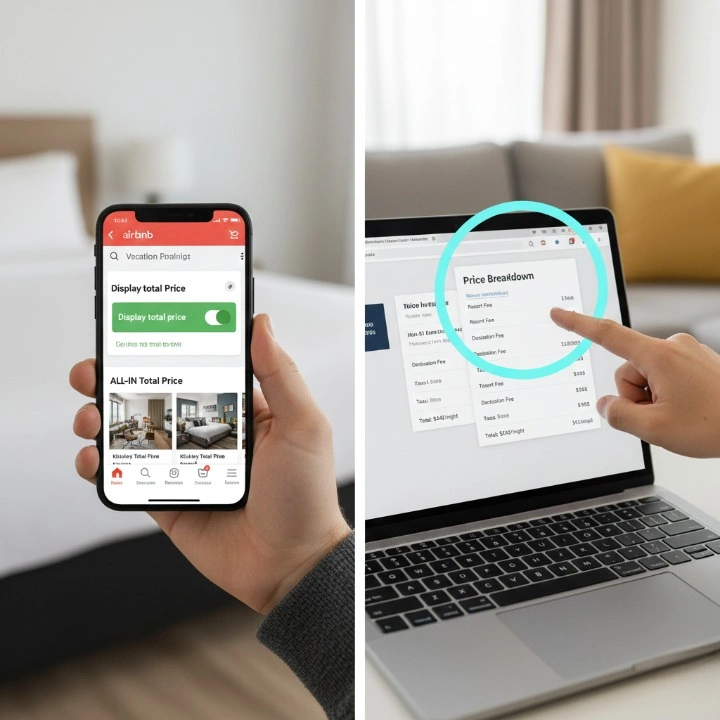
Hotels play a similar game but with Resort Fees or Destination Fees. These are almost always mandatory, meaning you have to pay them even if you never touch the “free” Wi-Fi or step foot in the gym. They can easily add $30 to $60 to your nightly bill.
To avoid a surprise at check-out, always look for the Price Breakdown link before you put in your credit card.
If the fees are too high, the best move is to look for a different hotel that doesn’t charge them at all, rather than hoping they’ll waive it later.
Airbnb vs Hotel Room Size
A bigger room isn’t always the better deal. The true value depends entirely on how much of that space you actually need for your trip.
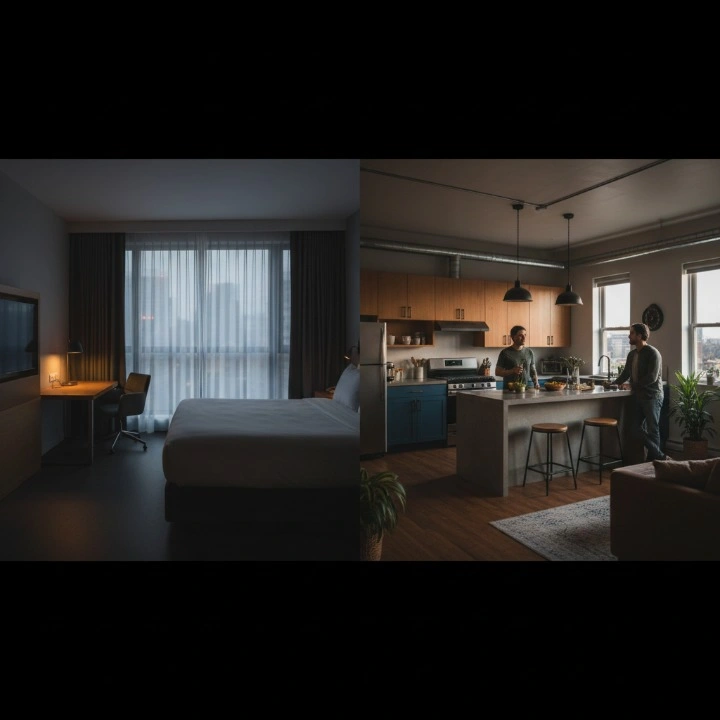
Most booking pages now list the exact size of the room, usually in square feet or meters. If you see a hotel for $150 that is only 200 square feet, it might feel small, but it can be a smart way to keep your costs down if you only plan to be there to sleep.
On the other hand, Airbnbs often provide more room for a similar price, frequently including a kitchen and a living area. For families or groups, this extra space is often the less expensive route because it prevents you from having to book two or three separate hotel rooms.
The trade-off comes down to service. While an Airbnb gives you a kitchen to help save on dining out, a hotel includes daily cleaning and on-site staff. If you don’t plan on cooking, paying for the extra square footage of an Airbnb might actually be more expensive than a simple, well-located hotel room.
To find the winner, you have to decide if you are paying for space you’ll actually use.
Airbnb vs Hotel Location
Finding a cheaper stay often means looking just outside the main tourist zones. However, to decide which option is truly the better value, you have to look at your total transportation spend alongside the room rate.
Hotels typically occupy the most convenient real estate. They are often built right next to major landmarks, train stations, and central hubs.
If your goal is to walk everywhere and save time, a hotel can often be the cheaper choice overall because your transportation cost is zero. Many hotels also offer free airport shuttles, which can save you around $40 taxi ride the moment you land.
Airbnbs, in contrast, are usually tucked away in residential neighborhoods. While the nightly rate in these areas is often lower, you need to check the map carefully. If the property is in a quiet area with limited public transport, you may find yourself relying on ride-shares, which can be expensive. On the plus side, residential Airbnbs frequently offer free street parking. This is a massive saving compared to a hotel’s valet or garage fees, which can easily top $50 a night in major cities.

The smartest way to compare is to look at the “Room + Transport” cost as a single number. If a central hotel allows you to skip the rental car and the daily parking fees, it might actually be the most budget-friendly move for your trip.
Airbnb vs Hotel food costs
The second biggest daily expense after your room is usually food. When deciding which stay is less expensive, you have to look at the “hidden” cost of every meal. In 2026, the average cost of a restaurant meal is nearly 300% more than a meal prepared at home. This makes the gap between eating out and eating “in” wider than ever.
Hotels offer the ultimate convenience: breakfast is often just an elevator ride away. However, unless it is explicitly marked as “Free” or “Included,” a hotel breakfast can be a major budget-killer. Many hotels now charge $25 to $35 per person for a morning buffet. If you’re a light eater who just wants a coffee and a pastry, you are paying a massive premium for convenience.

This is where the Airbnb kitchen becomes a secret weapon. Even if the nightly rate is slightly higher than a hotel, being able to stock a fridge with local groceries can save a couple or a family over $50 to $100 a day. Simple habits like making your own coffee, packing snacks, or having a quiet dinner “at home” once or twice can easily offset the entire cost of the rental.
The choice comes down to your travel style. If you want a total break from chores and plan to explore the local food scene for every meal, a hotel with a basic “included” breakfast is likely your best value. But if you’re looking to stretch your budget, the ability to cook even one or two meals a day in an Airbnb often makes it the less expensive choice in the long run.
How to Choose Between Airbnb & Hotel
At the end of the day, neither option is always “less expensive.” The winner depends on who you are traveling with and how long you plan to stay. In 2026, the best way to save money is to match your accommodation to your specific needs.
Choose a Hotel if:
- You are traveling solo or as a couple: A single hotel room is almost always cheaper than renting an entire apartment once you factor in the cleaning fees.
- You are only staying for 1 or 2 nights: Airbnb cleaning fees are a flat rate. If you only stay one night, that $100 fee makes your “cheap” room very expensive.
- You want total convenience: If you value daily housekeeping, on-site security, and a front desk that can help you at 2 AM, the hotel is worth the investment.

Choose an Airbnb if:
- You are traveling with a group or family: Renting one large home is significantly less expensive than booking three separate hotel rooms.
- Staying for a week or longer: Many hosts offer “weekly discounts,” and that one-time cleaning fee becomes much more affordable when spread out over seven days.
- And if You plan to cook your own meals: If you are happy to shop at a local market and eat breakfast or dinner “at home,” the savings on food will likely pay for the rental itself.
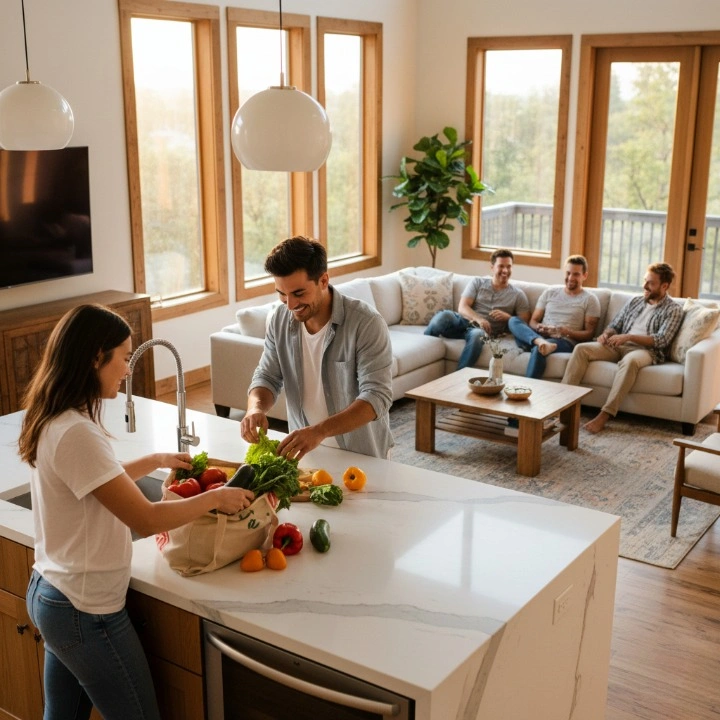
By looking at your total budget—including fees, transport, and food—you can stop guessing and start booking with confidence. Whether you choose the service of a hotel or the space of an Airbnb, knowing the “real” price upfront is the only way to ensure you get the best deal for your 2026 travels.
To wrap everything up, it’s helpful to see the numbers side-by-side. In 2026, the gap between a hotel and an Airbnb often comes down to the “extras” that don’t show up in the initial search results.
Here is a quick breakdown to help you decide which one is actually less expensive for your next trip.
Airbnb vs Hotel: Value Comparison
| Feature | Hotel | Airbnb |
| Best for | Solo travelers, couples, and short stays (1-2 nights). | Families, large groups, and long stays (5+ nights). |
| Hidden Fees | Resort fees or destination fees (often mandatory). | Cleaning fees (one-time charge) and service fees. |
| Food Savings | “Free” breakfast (if included), but pricey room service. | Full kitchen to cook meals and store groceries. |
| Transportation | Central locations; often walkable or near transit. | Residential areas; may require ride-shares or a car. |
| Amenities | Daily cleaning, gym, pool, and 24/7 security. | Private laundry, more living space, and a “local” feel. |
The Bottom Line: Which should you book?
There is no single “cheaper” option in 2026, but there is a smarter way to choose.
If you are a solo traveler who wants a simple, central place to sleep, a hotel is usually the less expensive and more convenient choice. You avoid the high one-time cleaning fees and benefit from being within walking distance of the sights.
However, if you are traveling with a group or staying for a week, an Airbnb quickly becomes the better value. Even if the nightly rate is the same as a hotel, the money you save by having a kitchen and more square footage can easily pay for a few extra nights of your vacation.
The best move? Always use the “Total Price” filters and look at your budget for the whole trip—including food and transport—before you click book.
Ready for your next adventure?
Check out my next post: Top Hotel Amenities That Make Your Stay Special— your quick guide to picking the perfect stay like a pro.
Airbnb vs Hotel: Answers to Common Travel Questions
Is it cheaper to stay in an Airbnb or a hotel for short trips?
Hotels are typically less expensive for 1–2 night stays. Because hotels do not charge the one-time cleaning fees found on Airbnb, your “all-in” nightly rate is often much lower. For quick weekend trips, a hotel is almost always the budget-friendly winner. Check Our Airbnb vs Hotel Comparison Table to decide the best option overall.
How much money does an Airbnb kitchen save compared to a hotel?
An Airbnb kitchen can save a family $50–$100 per day in food costs. By avoiding pricey hotel breakfasts and restaurant dinners, you can often justify the higher nightly price of a vacation rental. Over a 5-day trip, the savings on groceries can exceed $300. Check our Food Factor Breakdown
Is a central hotel better value than a cheaper Airbnb in the suburbs?
Often, yes. A central hotel eliminates the $30–$50 daily cost of ride-shares or transit tickets required to get from a residential Airbnb to the city’s attractions. When you factor in the “commute cost,” the more expensive central hotel is often the cheaper total option. Compare Total Room + Transport Costs
Is an Airbnb more cost-effective than a hotel for families or groups?
Yes. For groups of four or more, renting one Airbnb is significantly cheaper than booking two or more hotel rooms. Beyond the price per bed, you gain the added value of a shared living room and laundry, making group travel much more affordable. Read our Group Space Value Analysis
How do I find the lowest price for an Airbnb or a hotel?
Always use the “Display total price” toggle on Airbnb and check the “Price Breakdown” on hotel sites. This reveals hidden resort fees and cleaning charges early, allowing you to compare the actual final cost before entering your credit card info.Step-by-Step Guide: Finding the True Booking Price
Does more square footage make an Airbnb a better deal?
Not necessarily. While an Airbnb offers more square footage per dollar, it’s only a deal if you use it. If you only need a place to sleep between sightseeing tours, a compact hotel room is the less expensive choice over a large, underutilized apartment. Check our Space vs. Price Analysisto pay only for the room you actually need.
Want to keep up with our blog?
Get our most useful Austria & Europe travel tips in your inbox, about once a month.
By subscribing, you agree to receive occasional emails from LinzGo. You can unsubscribe at any time. Read our Privacy Policy.
Related Posts