15 Best Things to Do in Linz, Austria (2027)
Updated: September 23, 2026
This post contains affiliate links; we may earn a commission if you book through these links at no extra cost to you.
Creative, colourful, and confidently different, Linz is one of Austria’s most underrated city breaks.
Think futuristic museums glowing beside the Danube, panoramic views from Pöstlingberg, enormous murals hidden inside the harbour, and slices of Linzer Torte served in traditional cafés.
In this guide, we’re sharing the best things to do in Linz, from the attractions every first-time visitor should see to unusual cultural experiences, local food, and a few surprises along the way.
Whether you’re visiting for a day or spending a full weekend in Linz, there is far more to discover here than most travelers expect.
Linz at a Glance: Don’t Miss 👀
- Exploring the interactive exhibitions inside the Ars Electronica Center
- Riding the Pöstlingbergbahn for panoramic views over Linz
- Seeing enormous works of street art on an official Mural Harbor tour
- Cruising along the Danube and through Linz Harbour
- Wandering through Hauptplatz and the colourful Old Town
- Trying a slice of the original Linzer Torte
1. Explore the Ars Electronica Center
The Ars Electronica Center is the attraction that best explains what makes Linz different from other Austrian cities. While Vienna is known for imperial palaces and Salzburg for Mozart, Linz has built part of its identity around technology, digital art, and ideas about the future.
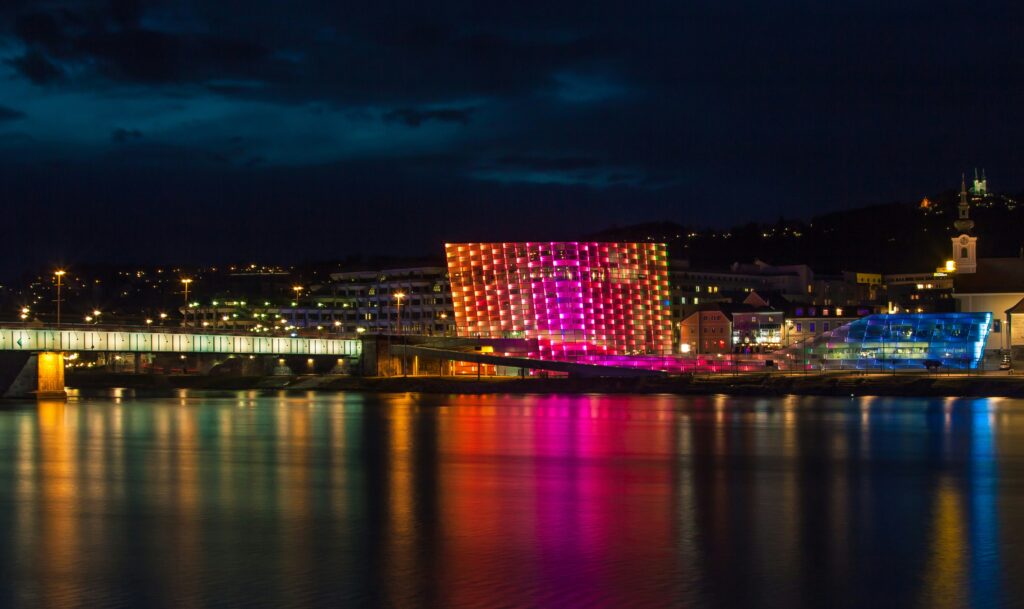
Inside, the museum feels more like a creative laboratory than a traditional exhibition space. You can interact with displays exploring artificial intelligence, robotics, virtual worlds, biotechnology, climate research, and the changing relationship between people and machines.
What makes the museum interesting is that it does not simply celebrate new technology. Many exhibitions also ask bigger questions about privacy, creativity, ethics, and how scientific developments may affect everyday life.
The displays are spread across several floors, and many encourage you to touch, test, and experiment rather than simply read information panels. This makes the museum easy to enjoy even if you do not normally consider yourself interested in science or technology.
Allow around two to three hours to explore without rushing. It is one of the best indoor activities in Linz on a rainy day, but it is also worth visiting simply because it reveals a side of the city that you will not find in Austria’s more traditional destinations.
The museum sits beside the Danube, around a ten-minute walk from Hauptplatz. You can easily combine it with Lentos Art Museum, a walk along the river, and the central stops in our one day in Linz itinerary.
💡 TIP: Return to the riverfront after sunset, even if you visit the museum during the day. The illuminated glass façade creates one of the most distinctive nighttime views in Linz.
2. Ride the Pöstlingbergbahn to Pöstlingberg
There is something wonderfully old-fashioned about leaving Linz’s main square on a city tram and ending up high above the rooftops less than half an hour later.
The Pöstlingbergbahn begins at Hauptplatz, crosses the Danube, and slowly winds through the peaceful residential streets above the city. The higher it climbs, the more Linz begins to disappear behind gardens, trees, and hillside homes.
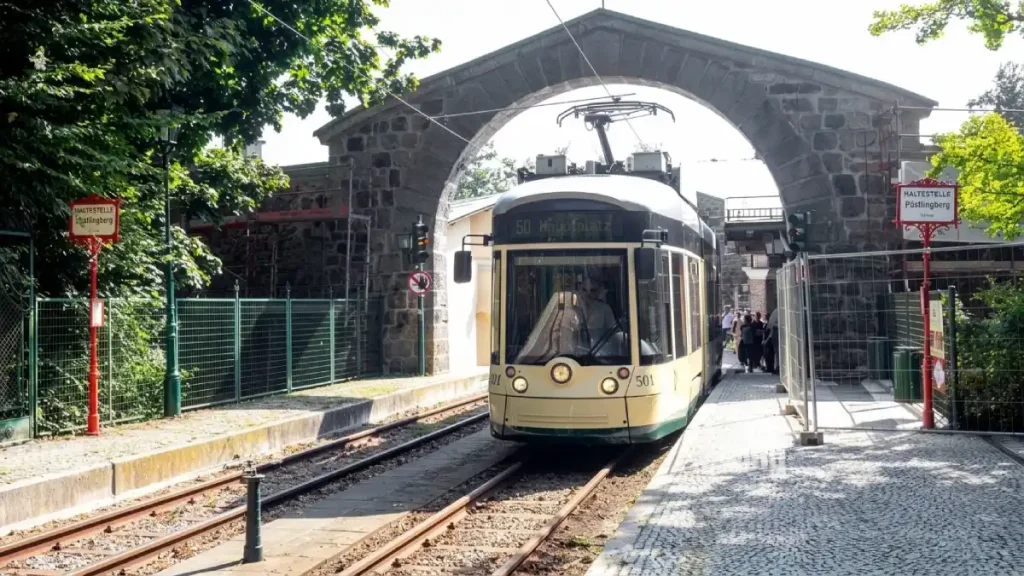
The railway has been carrying passengers up Pöstlingberg since 1898 and is considered one of the steepest adhesion railways in the world. Despite the gradient, the ride feels calm rather than dramatic, giving you time to watch the city gradually unfold below.
At the summit, the mood changes completely. The busy centre feels far away, the air is quieter, and the viewing terrace opens onto a sweeping panorama of Linz, the Danube, and the surrounding countryside. When the weather cooperates, the Alps can sometimes be seen in the distance.
A relaxed visit usually takes around two hours, including the return journey. It can easily become a half-day outing with lunch, a walk around the hill, or a visit to Grottenbahn.
Our one day in Linz itinerary includes Pöstlingberg without making the rest of the day feel rushed.
The ride is enjoyable in any season, but clear weather makes a big difference at the top. If the hill is hidden by heavy cloud, it may be worth saving Pöstlingberg for another part of your trip.
3. Discover the Giant Murals at Mural Harbor
A working industrial port is probably not the first place you would expect to find one of Linz’s most creative attractions. Yet across the warehouses, loading areas, and enormous concrete walls of the harbour, artists from around the world have created a vast open-air gallery.
Some murals cover the full side of a building, while others are hidden between cranes, containers, and industrial structures. The contrast is what makes Mural Harbor so memorable. It feels raw and unexpected rather than carefully arranged like a traditional museum.
There are now more than 300 murals and graffiti works across the harbour site, including several pieces covering hundreds of square metres. Seeing them in photographs gives you an idea of their designs, but not their enormous scale.
Mural Harbor is still part of an active industrial area, so you cannot simply arrive and walk around independently. The gallery can only be entered on an official guided tour, which usually lasts around 90 minutes and explains the artists, techniques, and stories behind the most important works.

The standard walks explore either the northern or southern section of the harbour. Some dates also include a graffiti session, giving you the chance to try spray painting after the tour. Spaces and English-language options can be limited, so this is one experience worth arranging before your trip.
Our guide to the best guided tours in Linz compares Mural Harbor with the city’s walking, food, and sightseeing tours.
This will not appeal to everyone. The gallery is outdoors, the ground can be uneven, and the industrial setting is part of the experience. But for street-art lovers, photographers, or anyone curious about Linz beyond its historic centre, it is easily one of the city’s most distinctive attractions.
5. Wander Through Hauptplatz and Linz Old Town
After the industrial edge of the harbour, Hauptplatz feels like a reset. The wide square is framed by pastel façades, pavement cafés, tram lines, and the tall Trinity Column standing at its centre.
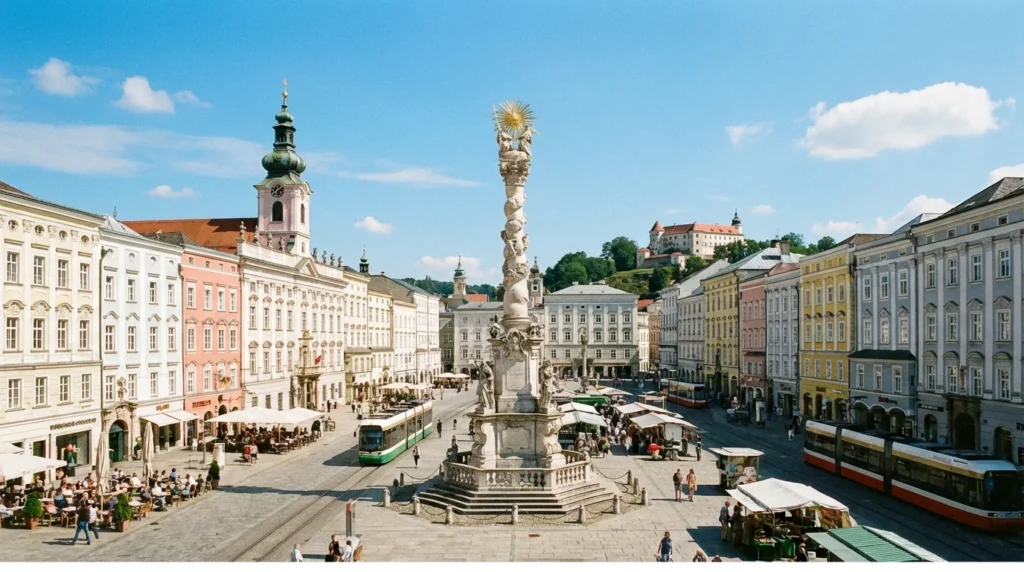
It is busy enough to feel lively without being overwhelming. Locals cross the square on their way to work, trams arrive beneath the historic buildings, and visitors pause here before heading towards the Danube or Pöstlingberg.
The Old Town begins just behind the western side of the square, where the streets become narrower and much quieter. This is the more traditional side of Linz, with cobbled lanes, Renaissance courtyards, small restaurants, and old houses gathered beneath Linz Castle.
A slow wander is really all this part of the city needs. The small lanes around Hofgasse and Altstadt are more enjoyable when you are not following a strict route, and it is easy to circle back towards Hauptplatz without getting truly lost.
The square and Old Town are also among the easiest attractions to enjoy without spending anything. Our guide to the best free things to do in Linz includes more viewpoints, riverside walks, and historic places that cost nothing to visit.
Early morning gives you the clearest view of the Trinity Column and surrounding façades. Later in the day, the square has more energy, especially when the café terraces are busy.
6. Step Inside the Mariendom
From the outside, the Mariendom is almost too large to take in at once. Its tower rises above the surrounding streets, while the long Neo-Gothic exterior seems to keep going as you walk around it.
The real surprise, though, is inside.
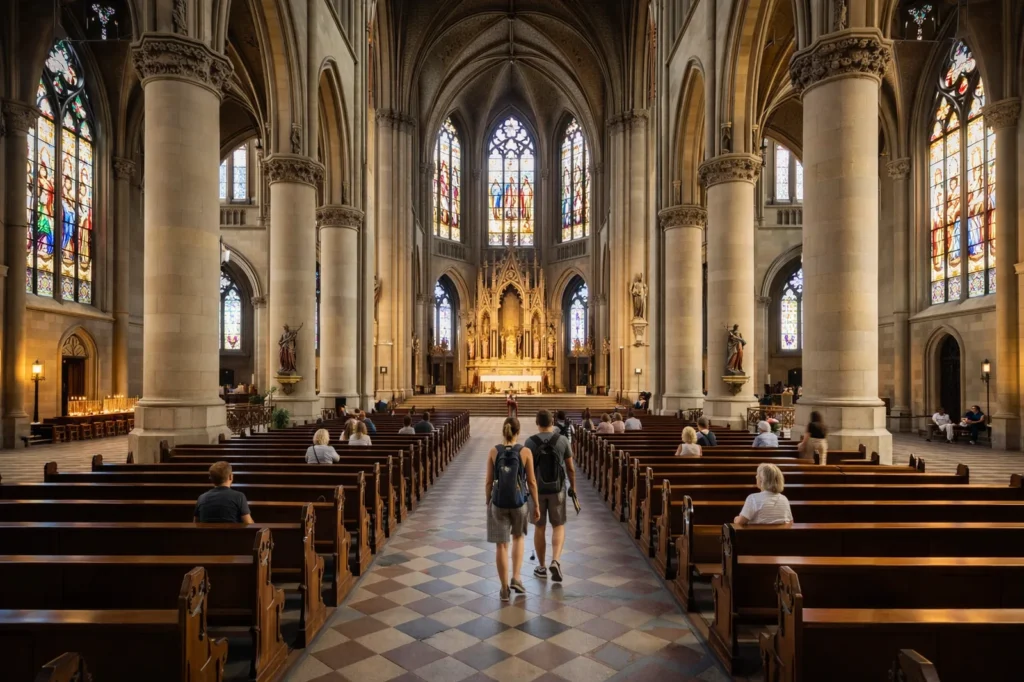
Austria’s largest church feels remarkably calm despite its size. Tall stone columns draw your eyes towards the vaulted ceiling, while more than forty large stained-glass windows fill the interior with changing patches of colour.
Some windows show biblical scenes, while others tell stories connected to Linz and Upper Austria. The details are easy to miss on a quick walk through, so this is one place where looking up and slowing down makes a difference.
Entry to the main cathedral is free, making it an easy stop while exploring the centre. Visitors who want to see more can also join special tours through areas that are normally closed to the public.
One of the most unusual options climbs high into the cathedral through narrow stairways and hidden spaces. The standard tower experience reaches a viewpoint around 68 metres above the city, while the more demanding Himmelsstiege tour involves 633 steps and reaches the highest viewing point inside a church in Austria.
The climb will not suit everyone, but it turns the Mariendom into much more than a brief cathedral visit. Even without going up the tower, the scale of the nave and the stained glass make this one of the most impressive interiors in Linz.
💡 TIP: The cathedral is usually quieter earlier in the morning, when the coloured light from the windows also feels at its best.
7. Taste the Original Linzer Torte
Linz has plenty of impressive museums and landmarks, but one of its best-known traditions fits neatly onto a small café plate.
The Linzer Torte is a dense pastry made with ground nuts, warm spices, and a layer of redcurrant or raspberry jam. Its lattice top makes it instantly recognisable, while the combination of buttery pastry and slightly sharp fruit keeps it from tasting overly sweet.
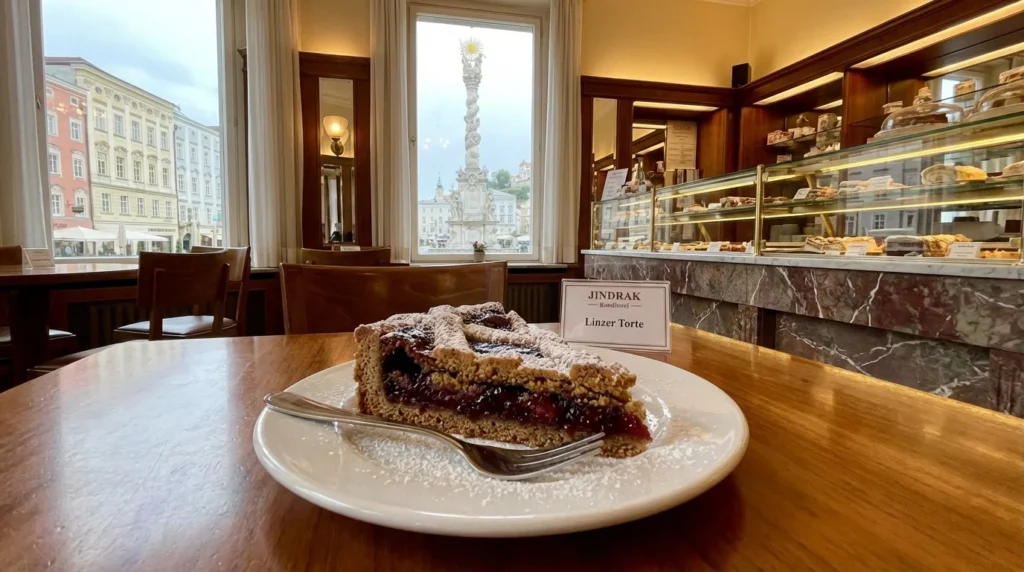
A surviving recipe bearing the Linzer Torte name dates back to 1653, although the cake has changed over the centuries and different bakeries still use their own variations. It is better understood as a local tradition than one single “original” recipe.
Jindrak is the most famous name associated with the cake in Linz and an easy place to try a classic slice. Still, there is no need to treat it as the only correct option. Several traditional cafés and bakeries across the city serve their own versions, and comparing two can be surprisingly enjoyable.
It is worth knowing that Linzer Torte does not taste like a light sponge cake. The pastry is richer, nuttier, and slightly crumbly, so it pairs especially well with coffee or tea. A single slice is usually enough, particularly in the middle of a full sightseeing day.
This makes an easy break between the Old Town and Mariendom, and it fits naturally into our one day in Linz itinerary without taking up much of the afternoon.
🍰 OUR TAKE: Trying Linzer Torte is worthwhile because it belongs to the city’s story, not because it will necessarily become everyone’s favourite dessert. The flavour is traditional and distinctive, but visitors expecting a soft, creamy cake may be surprised by its firmer texture.
8. See Modern Art at the Lentos Art Museum
The Lentos Art Museum is almost impossible to miss. Its long glass building stretches along the Danube, directly opposite the Ars Electronica Center, and glows in changing colours after sunset.
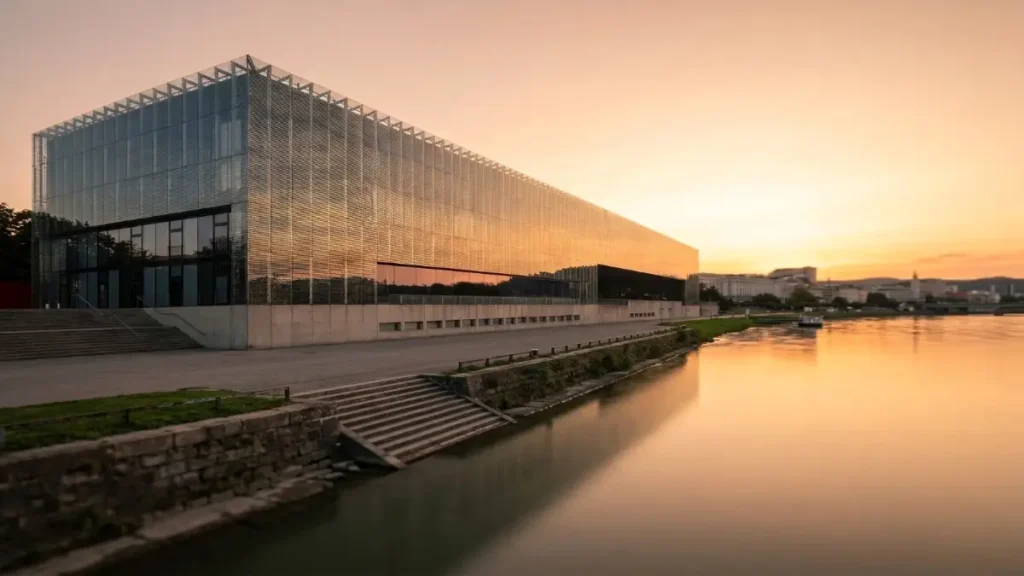
The architecture may draw you inside, but the collection is much broader than the futuristic exterior suggests. The galleries move from early twentieth-century European art into photography, sculpture, performance art, and contemporary works.
Artists represented in the collection include Egon Schiele, Oskar Kokoschka, Maria Lassnig, Keith Haring, Gabriele Münter, and VALIE EXPORT. Temporary exhibitions change throughout the year, so the experience can feel quite different from one visit to the next.
Lentos works best for visitors who genuinely enjoy modern and contemporary art. If you only have time for one museum and prefer interactive experiences, Ars Electronica will probably be the stronger choice. Art lovers, however, could easily spend two hours here without feeling rushed.
The museum is currently open from Tuesday to Sunday, with extended hours on Thursday evenings. It normally closes on Monday, which is worth remembering when planning a museum-heavy trip.
Even without going inside, the riverside terrace and illuminated façade are worth seeing. The building looks especially striking after dark, when its coloured glass reflects across the Danube.
Lentos is less immediately playful than Ars Electronica, but it offers a calmer experience and a stronger traditional museum collection. The two complement each other well rather than feeling like competing versions of the same attraction.
9. Explore Linz Castle and the Schlossmuseum
Perched above the Old Town, Linz Castle looks historic from one side and surprisingly modern from the other. The original stone buildings are joined by a glass-and-steel wing, creating the same contrast between past and present that appears throughout the city.
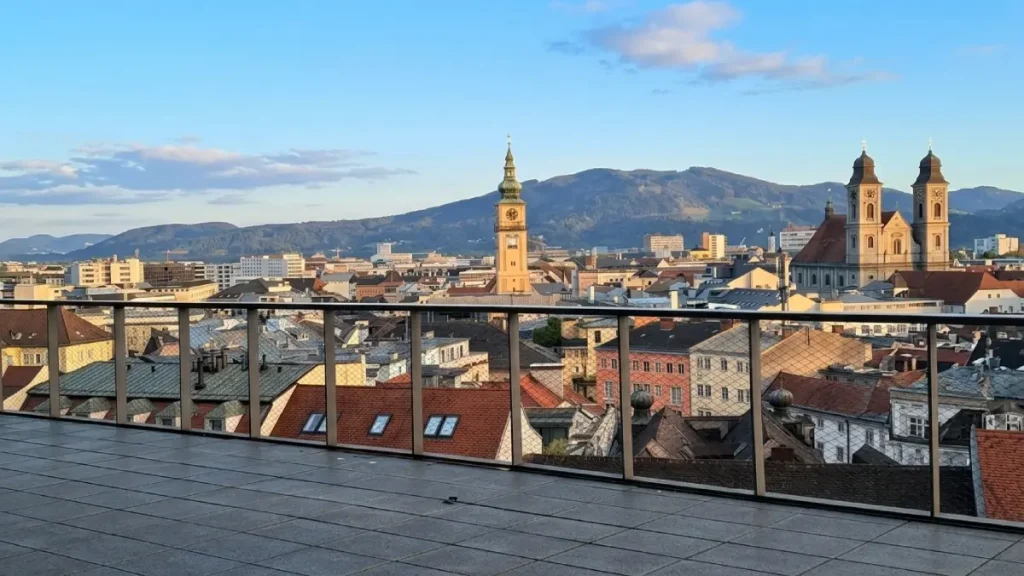
Inside, the Schlossmuseum tells the wider story of Upper Austria rather than focusing only on the castle itself. Its collections cover archaeology, art, nature, traditional crafts, historic weapons, coins, and musical instruments, with exhibitions stretching from prehistoric times to the present day.
It is a large museum, with more than 10,000 square metres of exhibition space, so trying to inspect every display can become tiring. Most visitors will enjoy it more by choosing the collections that interest them and allowing around 90 minutes to two hours.
The setting is just as rewarding as the collection. From the terraces and paths around the castle, the red rooftops of the Old Town slope towards the Danube, with Pöstlingberg rising across the river.
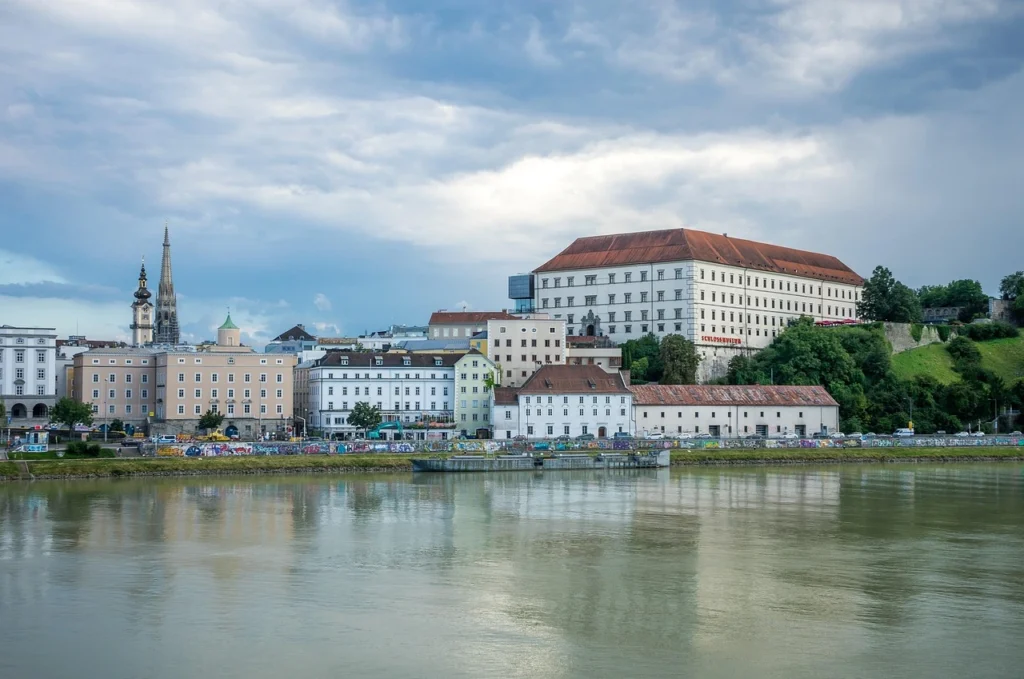
The museum is a good choice for anyone curious about Linz and Upper Austria beyond the headline attractions. However, visitors primarily interested in interactive technology or contemporary art may find Ars Electronica or Lentos more immediately engaging.
The Schlossmuseum is generally open from Tuesday to Sunday, 10 am to 6 pm, and closes on Monday unless it is a public holiday. Admission is included with the Linz Card.
10. Explore Linz on a Guided Walking Tour
Linz is compact enough to explore on your own, but many of its most interesting stories are easy to miss when you are simply following Google Maps from one attraction to the next.
A guided walk adds context to the Old Town, from the pastel façades around Hauptplatz to the narrow streets leading towards Linz Castle. Small details such as historic signs, tucked-away passageways, and unusual architectural features suddenly become part of the city’s story.
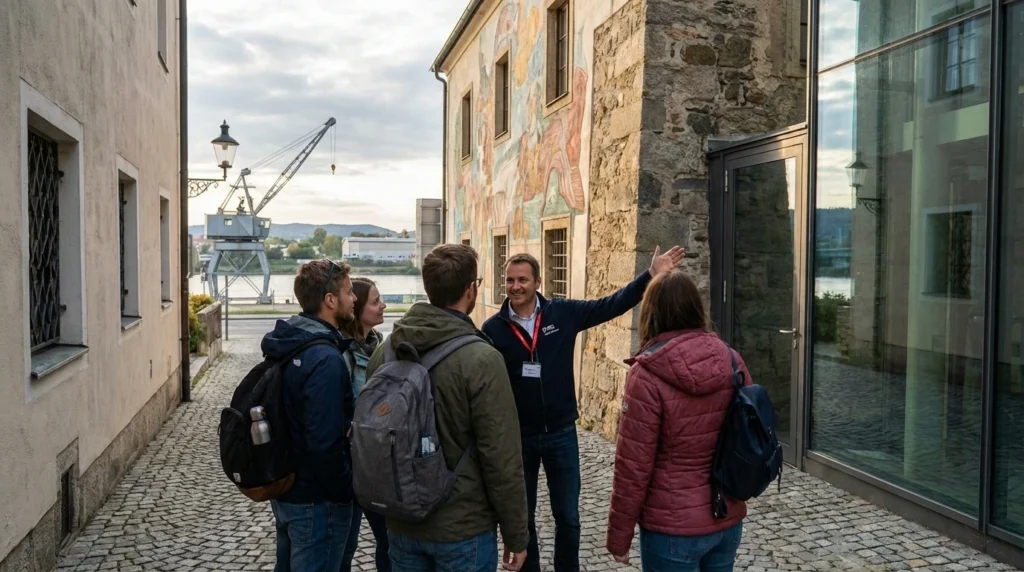
Tours vary considerably. Some focus on the essential landmarks and Linz’s development along the Danube, while others explore hidden corners, local food, modern architecture, or the city’s more difficult twentieth-century history.
Private tours can be especially useful for couples, families, or small groups because the pace and focus are often more flexible. They also give you the chance to ask questions rather than simply following a fixed route.
A walking tour works best near the beginning of your stay. Once you understand how Hauptplatz, the Old Town, the castle, and the riverfront connect, the rest of Linz becomes much easier to explore independently.
Our guide to the best guided tours in Linz compares the main options and explains which experiences are most suitable for first-time visitors.
🚶 OUR TAKE: Linz is not a city that reveals everything immediately. A good guide can make its quieter streets and less obvious details far more interesting than they might appear at first glance.
11. Slow Down Along the Danube at Donaupark
The Danube is not simply something you cross while moving between the Old Town and Ars Electronica. It is where Linz feels most relaxed.
Donaupark, also known locally as the Donaulände, stretches along the river between Lentos Art Museum and Brucknerhaus. Wide lawns, riverside paths, modern sculptures, and uninterrupted views across the water make it a lovely place to pause after several hours of sightseeing.
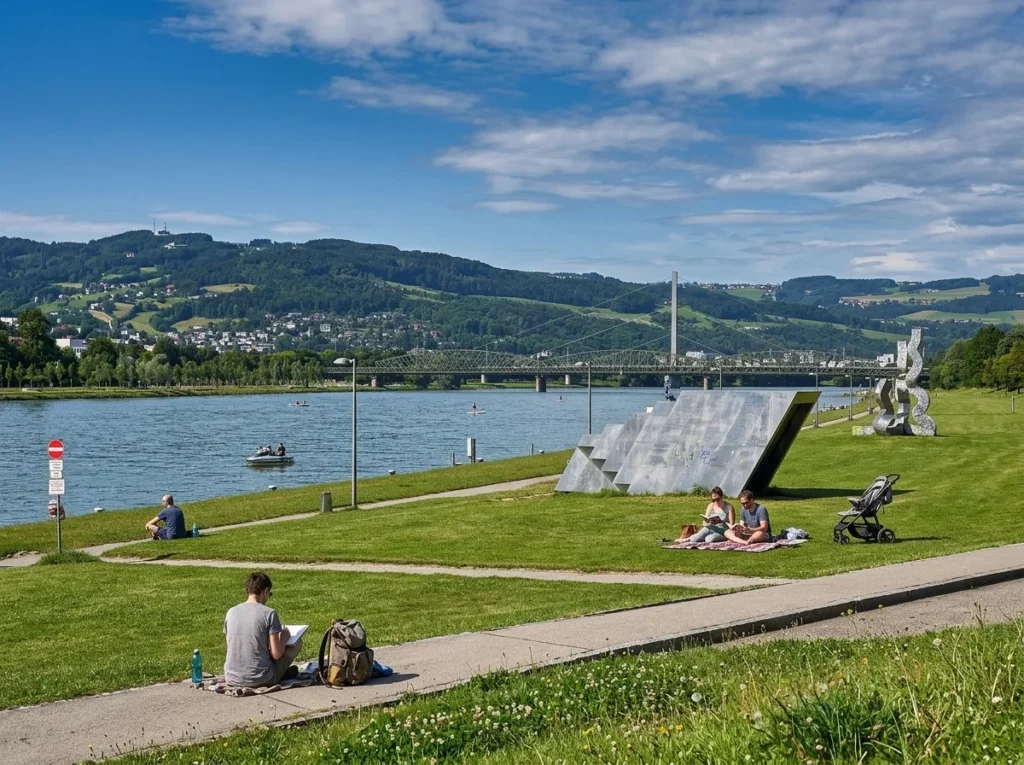
The atmosphere changes throughout the day. Mornings are peaceful, while warm afternoons bring cyclists, students, families, and groups of friends to the riverbank. Around sunset, the glass façades of Lentos and Ars Electronica begin to glow, creating one of the prettiest evening scenes in Linz.
During summer, the riverside becomes even livelier. Open-air concerts and festivals regularly take place here, while the seasonal Sandburg beach bar adds deck chairs, drinks, and a surprisingly convincing holiday atmosphere beside the Danube.
🌅 BEST TIME: Come in the late afternoon and stay until the lights appear across the river. It is a simple experience, but it captures the relaxed side of Linz better than another museum ever could.
12. Ride a Dragon Through the Grottenbahn
Hidden inside one of Pöstlingberg’s old fortress towers is an attraction that feels as though it has barely changed in a century.
The Grottenbahn begins with a ride on Lenzibald, a dragon-shaped train that circles through a dimly lit world of dwarfs, giant insects, mushrooms, and strange little scenes. It is charming, slightly bizarre, and very different from the polished attractions found in most modern cities.
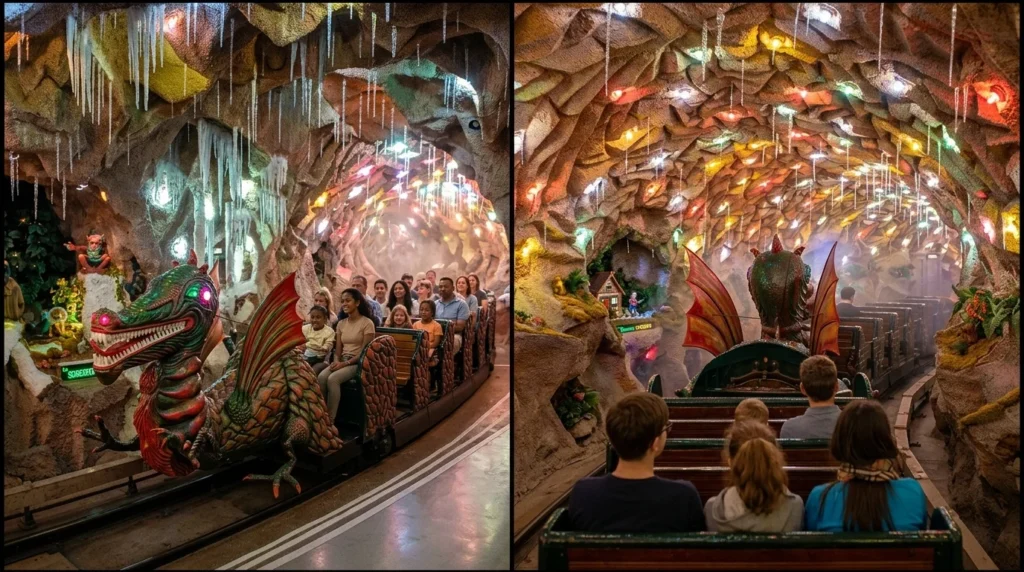
Downstairs, the experience continues through displays based on familiar fairy tales. There is also a detailed miniature version of Linz’s Hauptplatz as it appeared around 1900, complete with tiny shopfronts and figures peering from the windows.
The Grottenbahn is mainly designed for younger children, so adults travelling alone may find it more nostalgic than exciting. Still, it is one of Linz’s most unusual traditions and an easy addition to a Pöstlingberg visit when travelling as a family.
It is a seasonal attraction rather than something that operates every day throughout the year, so opening dates are worth checking before heading up the hill.
Our guide to Linz with kids includes more family activities and helps you decide whether the Grottenbahn deserves a place in your itinerary.
🐉 OUR TAKE: Families with young children should keep it on the list. Adults without children can comfortably skip it unless quirky, old-fashioned attractions are exactly their thing.
13. Browse the Shops Along Landstraße
Shopping may not be the main reason to visit Linz, but Landstraße adds plenty of life to the city centre. The long avenue runs south from Taubenmarkt, with trams passing between department stores, familiar international brands, cafés, and bakeries.
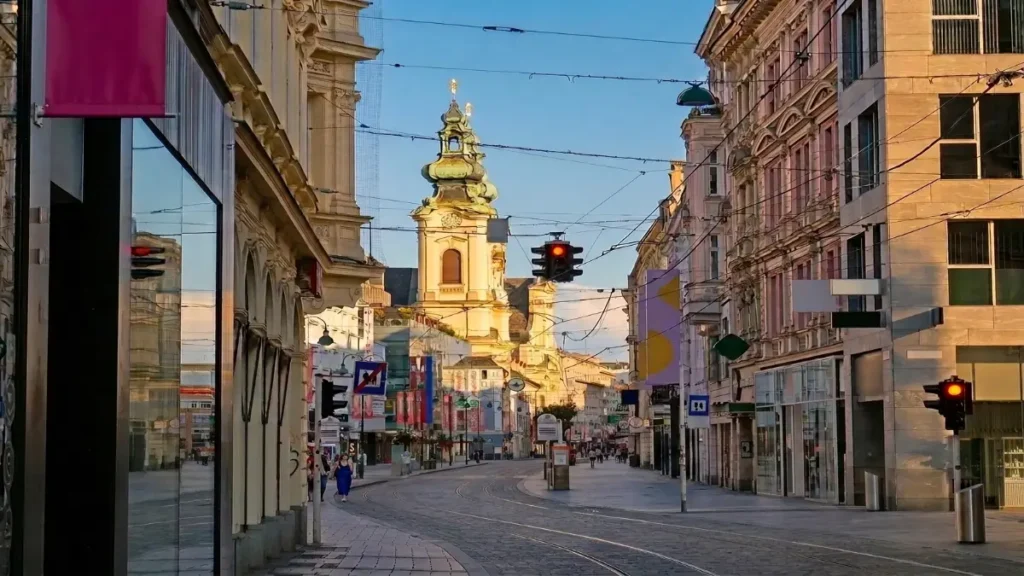
It is a pleasant street to browse rather than a destination that needs several hours. The central stretch is largely pedestrian-friendly, and its location makes it easy to explore between Hauptplatz, Mariendom, and Volksgarten.
Landstraße is best for mainstream shopping. Travellers looking for smaller boutiques and more individual finds will have better luck on the side streets around Herrenstraße, Bischofstraße, and Spittelwiese. These quieter streets contain a changing mixture of independent fashion stores, bookshops, speciality shops, antiques, and small cafés.
This is also a useful place to pick up something connected to the city, whether that is a packaged Linzer Torte, Austrian-made design, local food, or a small souvenir that feels less generic than the usual fridge magnet.
14. Spend a Relaxed Afternoon at Linz Zoo
Set on the lower slopes of Pöstlingberg, Linz Zoo offers a quieter break from museums and city-centre sightseeing.
The zoo is arranged along green hillside paths, with a mixture of outdoor enclosures, shaded areas, and occasional views back towards Linz. Its compact layout makes it easy to explore without turning the visit into an exhausting full-day activity.
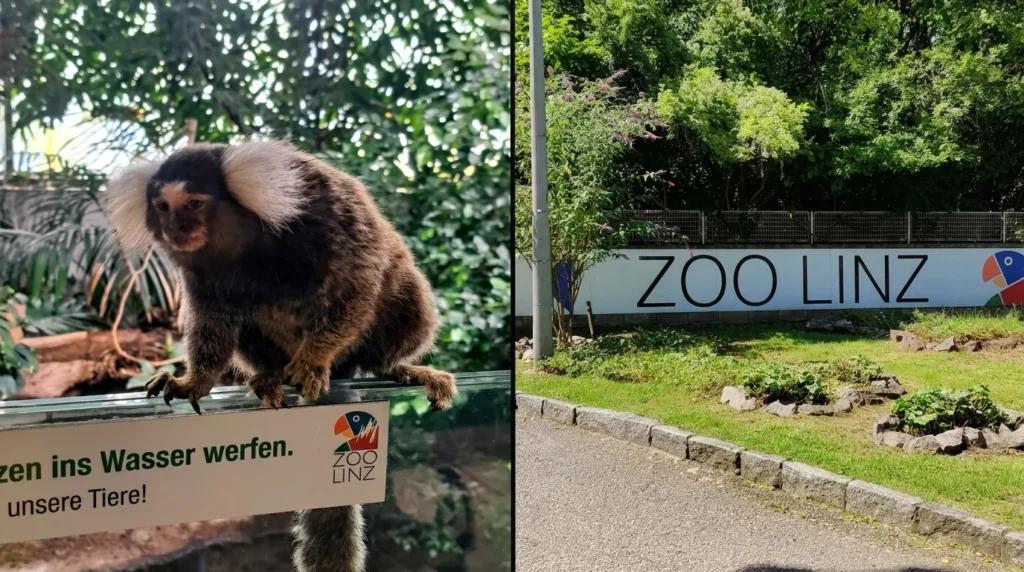
Around 600 animals from roughly 100 species live here, including zebras, meerkats, kangaroos, antelopes, monkeys, birds, and reptiles. The collection is varied enough to keep the walk interesting, while the smaller scale means you can see most of the zoo without rushing.
The tropical house adds a different atmosphere, with reptiles, caimans, snakes, and other animals living in a warmer indoor environment.
A relaxed visit usually takes around two hours, making the zoo easy to combine with Pöstlingberg or another activity nearby. The paths include some slopes and uneven sections, so comfortable shoes are a good idea.
The zoo is open throughout the year, although longer opening hours apply during the warmer months.
15. Escape to the Botanical Garden
After the museums, riverfront, and busy streets around Hauptplatz, the Botanical Garden Linz feels like a welcome change of pace.
Spread across 4.2 hectares, the garden contains thousands of plants arranged through seasonal flower beds, themed outdoor areas, sculpture displays, and several greenhouses. It is compact enough to explore without losing half a day, but varied enough that the walk never feels repetitive.
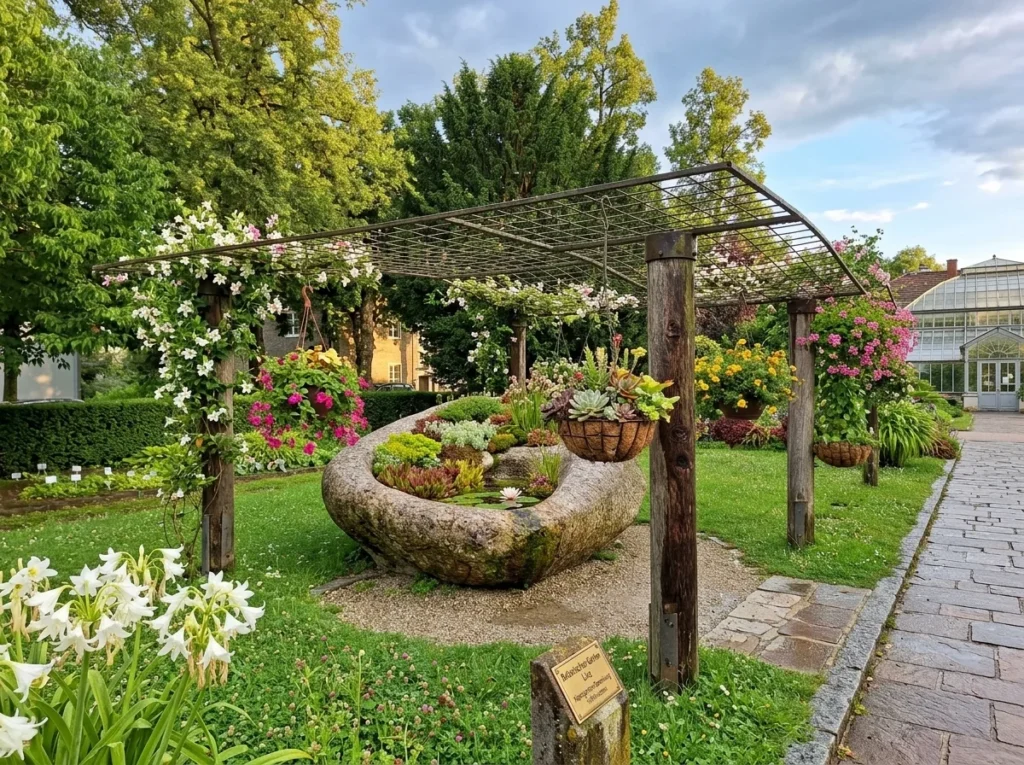
The greenhouses are one of the main reasons to visit. The orchid collection includes around 1,100 species and is considered one of the most important in Europe, while the cactus collection contains roughly 1,000 species. There is also a tropical house filled with warm air, large leaves, and plants from much wetter climates.
The garden changes noticeably with the seasons. Spring brings fresh colour and flowering bulbs, roses become the highlight later in the year, and the indoor houses keep the visit worthwhile even when the weather is cooler.
A slow walk normally takes around one to two hours, depending on how much time you spend inside the greenhouses or at Café Orchidee.
The Botanical Garden is open throughout the year, with longer outdoor opening hours from April to September. Standard admission is currently €4.60, making it one of the more affordable paid attractions in Linz.
🌿This is not one of Linz’s headline attractions, but it is one of the most pleasant places to slow down. It works especially well after a museum-heavy morning or when you have more than one day in the city.
Where to Stay in Linz
For a first visit, Motel One Linz-Hauptplatz is hard to beat. It sits directly on Hauptplatz in the historic centre, putting the Old Town, the Danube, the Pöstlingbergbahn, and several attractions in this guide within easy walking distance.
The rooms are modern and comfortable, although some are fairly compact. The real reason to stay here is the location: you can step outside in the morning and begin exploring Linz immediately, without spending much of the trip on transport.
For more space, lower-priced options, or hotels closer to the train station, our complete guide to where to stay in Linz compares the best areas and hotels.
How Many Days Do You Need in Linz?
You can see several of Linz’s highlights in one day, especially if you focus on the Old Town, Ars Electronica, and Pöstlingberg.
A weekend gives the city more room to breathe. With two days, you can add Mural Harbor, a harbour cruise, Lentos, or Schlossmuseum without racing between attractions.
Our one day in Linz itinerary follows an efficient route through the main sights, while our guide to how many days to spend in Linz compares one, two, and three-day stays in more detail.
For most first-time visitors, two days is the sweet spot. It is enough time to experience both Linz’s historic centre and the modern, creative side that makes the city different.
Want to keep up with our blog?
Get our most useful Austria & Europe travel tips in your inbox, about once a month.
By subscribing, you agree to receive occasional emails from LinzGo. You can unsubscribe at any time. Read our Privacy Policy.