First Time in Hallstatt: The Perfect Itinerary (2027)
Updated: September 23, 2026
This post contains affiliate links; we may earn a commission if you book through these links at no extra cost to you.
Hallstatt may look calm and effortless in photos, but visiting it well takes more planning than most first-timers expect. The village is tiny, the crowds arrive fast, and one badly timed decision can turn a dream day into a rushed walk between photo stops.
This guide will help you arrive at the right time, avoid the busiest mistakes, choose what is genuinely worth seeing, and build the perfect Hallstatt itinerary for 2026.
From the ferry crossing and famous viewpoint to the Salt Mine, Skywalk, and quieter corners of the lake, everything you need for a smooth first visit starts here.
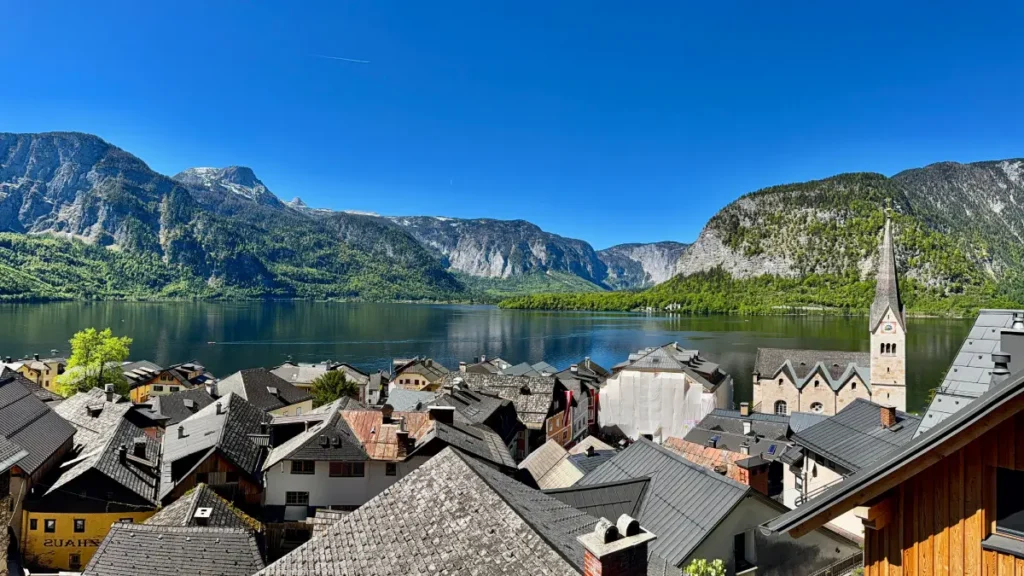
Table of Contents
1. Getting to Hallstatt and Getting Around
Before you can cross the lake and photograph Hallstatt’s famous church spire, you have to figure out how to reach the village. Hallstatt is small, but its location between a mountain and a lake makes the journey slightly more unusual than arriving in a normal Austrian town.
Getting to Hallstatt
You have three primary options:
The Train and Ferry: This is the best option for a first-time visitor. Take the train to Hallstatt station, then walk a few minutes downhill to the ferry. The boat crosses the lake in around 15 minutes and costs roughly €4 each way. As you approach the village, the church spire, wooden houses, and mountains slowly come into view, giving you the classic Hallstatt panorama before you even step ashore.
The Bus: This is usually the easiest public-transport option from Salzburg. The journey takes around 2.5 hours and includes one change along the way. The bus drops you at the southern entrance to Hallstatt, around a 15-minute walk from the historic center. The route passes lakes and mountain villages, so the scenery makes the longer journey much more enjoyable.
Driving: A car gives you the most freedom, especially if Hallstatt is part of a wider Austrian road trip. The historic center is car-free, so visitors park outside the village and walk in. Expect to pay around €15 for most of the day or roughly €20 for 24 hours. Parking fills quickly in summer, so arriving early is far easier than searching for a space around noon.
Coming from Vienna? Our Hallstatt day trip from Vienna guide compares the train, car, and guided-tour options in more detail.
Navigating Hallstatt
Once you arrive, Hallstatt is extremely walkable. You can cross the main village in around 20 minutes, and most attractions sit along the same lakeside street.
The waterfront, Market Square, ferry landing, and famous photo point are all close together. A few sights sit higher above the village and require steep steps, but you will not need buses, taxis, or any kind of local transport pass.
The bigger challenge is not distance. It is reaching the village before everyone else does.
2. How to Plan Your Day in Hallstatt
The single biggest mistake first-timers make in Hallstatt is arriving around noon and expecting the silent lakeside village they saw online. By that time, tour buses have unloaded, the famous viewpoint is crowded, and the narrow waterfront can feel more like a queue than an alpine escape. You must plan your visit around the rhythm of the village.
Here is how the true Hallstatt day works:
7:30 AM – 9:30 AM: The Postcard Hours
This is when Hallstatt comes closest to the photographs. The lake is often still, the streets are quiet, and the famous church-spire viewpoint has not yet filled with camera phones. Start with the waterfront, Market Square, and classic photo point before doing anything that requires a ticket.
9:30 AM – 11:30 AM: The Sightseeing Window
The village begins waking up, but the largest tour groups are still arriving. This is the best time for the Catholic Church, the Bone House, and the World Heritage Museum. Once the Salt Mine and Skywalk are open, this is also the ideal time to head uphill before queues build.
11:30 AM – 3:00 PM: The Midday Crush
This is Hallstatt at its busiest. Tour groups fill the center, restaurants become crowded, and the famous viewpoint can feel like everyone is waiting for the same photograph. Use these hours for lunch, the museum, a boat ride, or any attraction away from the main waterfront.
3:00 PM – 5:30 PM: The Great Escape
Visitors start checking return times, coaches begin loading, and the village slowly becomes easier to enjoy. This is a good time to walk through the upper lanes, stop for coffee, or return to any viewpoint that felt too crowded earlier.
After 5:30 PM: The Overnight Reward
Once most day-trippers leave, Hallstatt finally exhales. The lakefront grows quieter, restaurant terraces feel calmer, and the village starts resembling the peaceful place shown in the photographs. If you want to experience this side of Hallstatt, our guide to where to stay in Hallstatt compares the best areas, hotels, and nearby alternatives.
You do not need to avoid Hallstatt’s crowds completely. You simply need to be in the right place when everyone else is somewhere else.
3. Where to Stay in Hallstatt
For most first-time visitors, staying inside Hallstatt village is the easiest choice. You can walk to the Market Square, ferry landing, lakefront, restaurants, and main sights without relying on transport.
Heritage Hotel Hallstatt and Seehotel Grüner Baum are two central options if you want to stay right in the village.
If you prefer more space, easier parking, and usually better value, Obertraun is the main alternative across the lake.
For a full comparison of areas and hotels, see my Where to Stay in Hallstatt: Best Areas & Hotels guide.
4. How Long to Spend in Hallstatt
Hallstatt is home to the world-famous lakeside viewpoint, the Bone House, and the World Heritage Museum. It boasts an ancient salt-mining history, dramatic mountain scenery, and one of the most beautiful ferry arrivals in Austria. It has boat rides, church towers, hidden lanes, and panoramic viewpoints above the lake. The temptation is to run from attraction to attraction, checking things off a list.
Do not do this. The true joy of Hallstatt is found in the spaces between the sights. It is watching the village appear from the ferry, sitting beside the lake with a coffee, and wandering through the quiet upper lanes while everyone else crowds around the same photograph.
If you are only visiting for the day, you need to be brutal with your time management. Follow our step-by-step Hallstatt day trip guide to ensure you see the absolute essentials, like the Market Square, Bone House, and famous viewpoint, without feeling like you are racing against the final bus or ferry.
However, to truly understand the charm of the village, I highly recommend staying overnight. With more time, you can explore the waterfront after the tour groups leave, enjoy the quiet morning atmosphere, and visit nearby lakes and mountain attractions at a slower pace. For the best base, pull up our complete guide to where to stay in Hallstatt. This gives you the breathing room to actually experience Hallstatt, rather than simply photographing it.
5. Best Things to See and Do in Hallstatt
While I strongly advocate for slow wandering, there are a few heavy hitters you simply cannot leave Hallstatt without seeing. Here are the non-negotiables:
1. The Classic Hallstatt Viewpoint
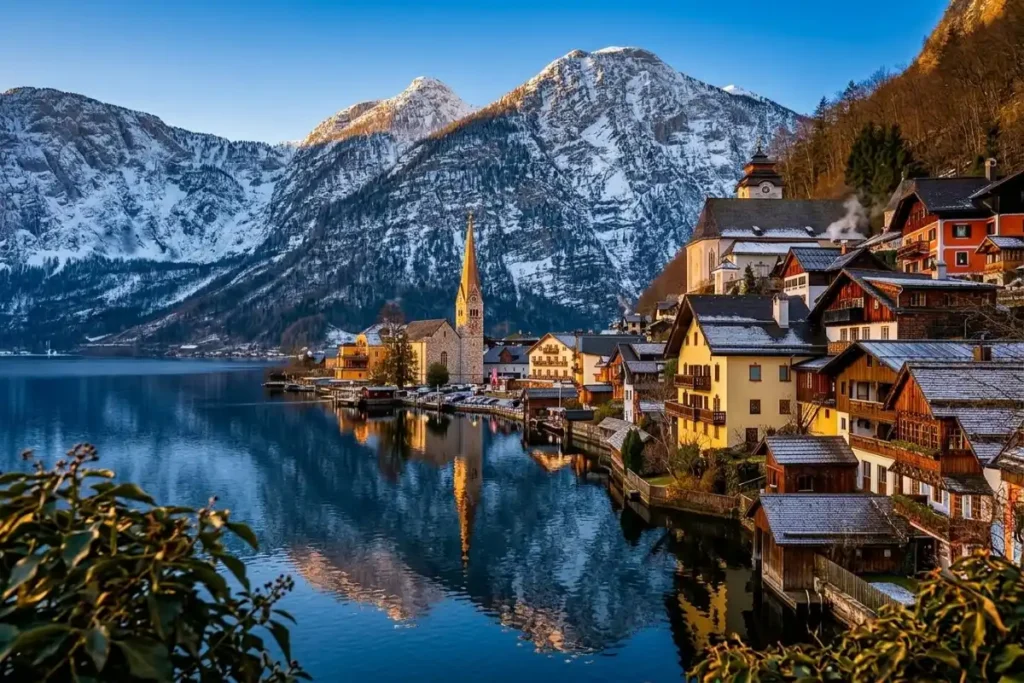
This is the photograph that made Hallstatt famous. From the northern end of the village, you get the church spire, wooden lakeside houses, mountain slopes, and water in one perfect frame. Go early in the morning if you can. The light is softer, the lake is often calmer, and you will have a much better chance of enjoying the view without standing behind a long line of cameras.
2. Hallstatt Market Square
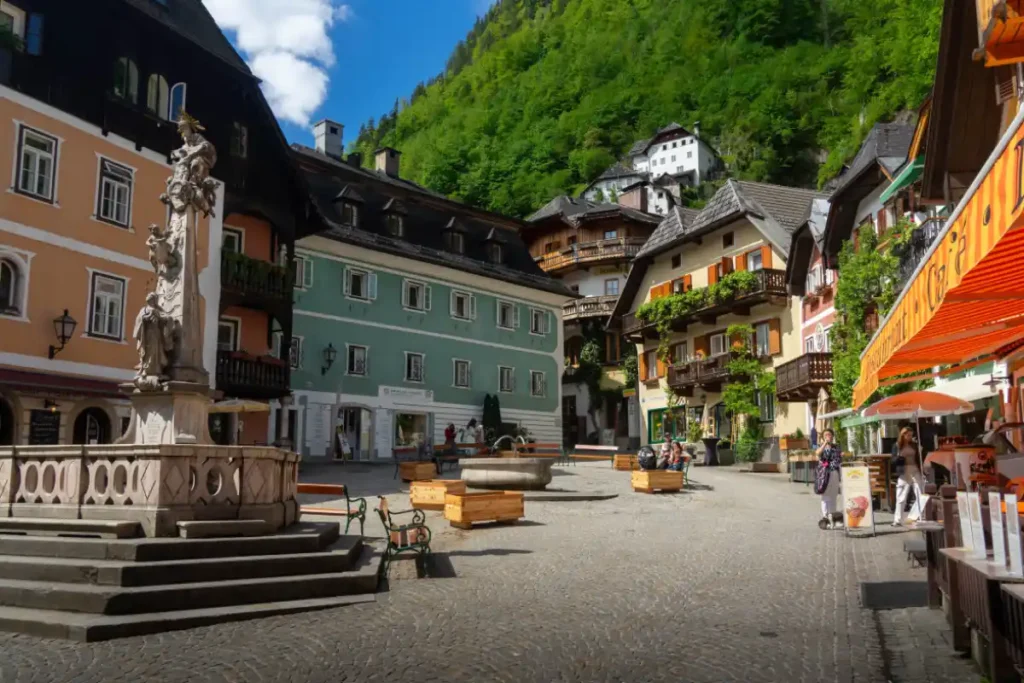
This is the colorful heart of the village, surrounded by traditional houses, flower-covered balconies, cafés, and small hotels. The square is much smaller than it appears in photographs, so it can change from peaceful to packed within minutes. Walk through early, then come back later for coffee when the busiest groups begin moving on.
3. The Protestant Church
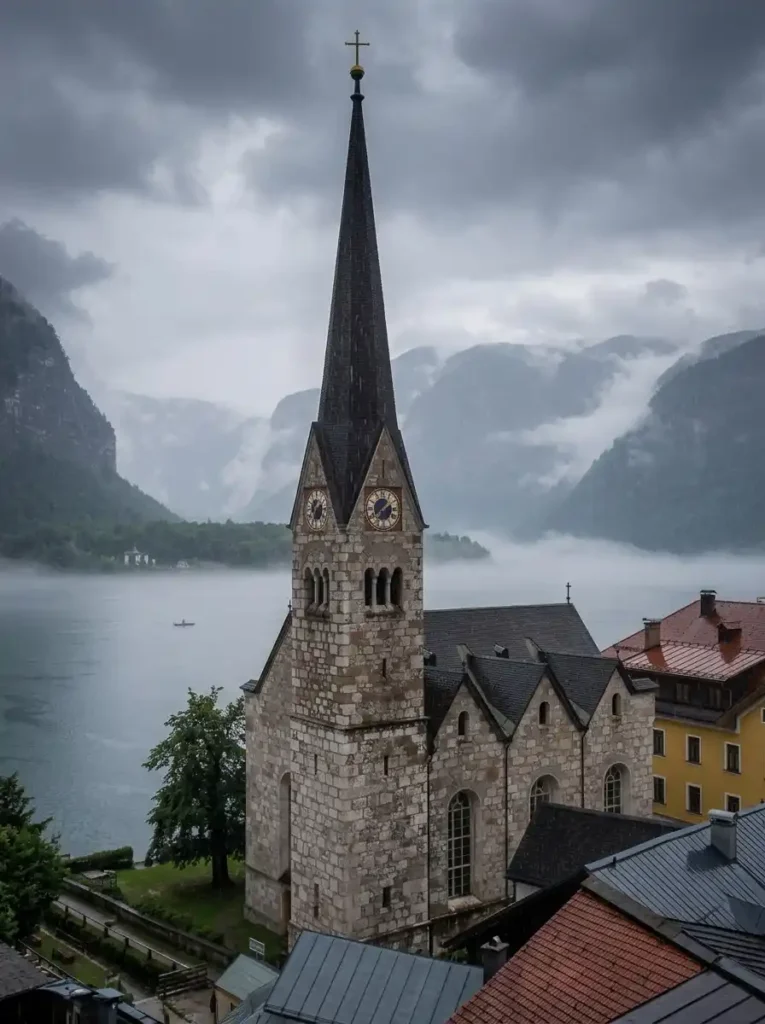
The slender lakeside church is the landmark that makes Hallstatt instantly recognizable. Its tower rises above the waterfront and appears in almost every classic photograph of the village. The interior is simple and quiet, which makes it a pleasant place to step inside when the streets outside become busy.
4. The Catholic Church
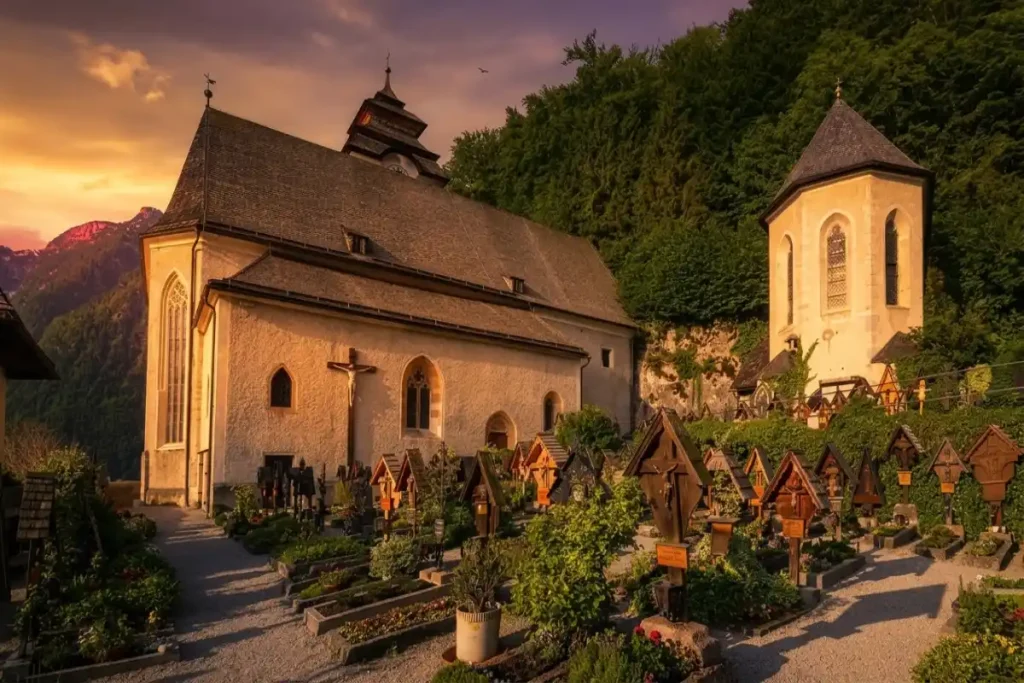
The Catholic Church sits on a small hill above Hallstatt, surrounded by one of the most beautiful cemeteries in Austria. Wooden grave markers, flower-filled plots, and the mountains rising behind the church make the setting feel peaceful rather than sombre. The short climb is worth it for the atmosphere alone, but you also get excellent views over Hallstatt’s rooftops and the lake below.
5. The Hallstatt Bone House
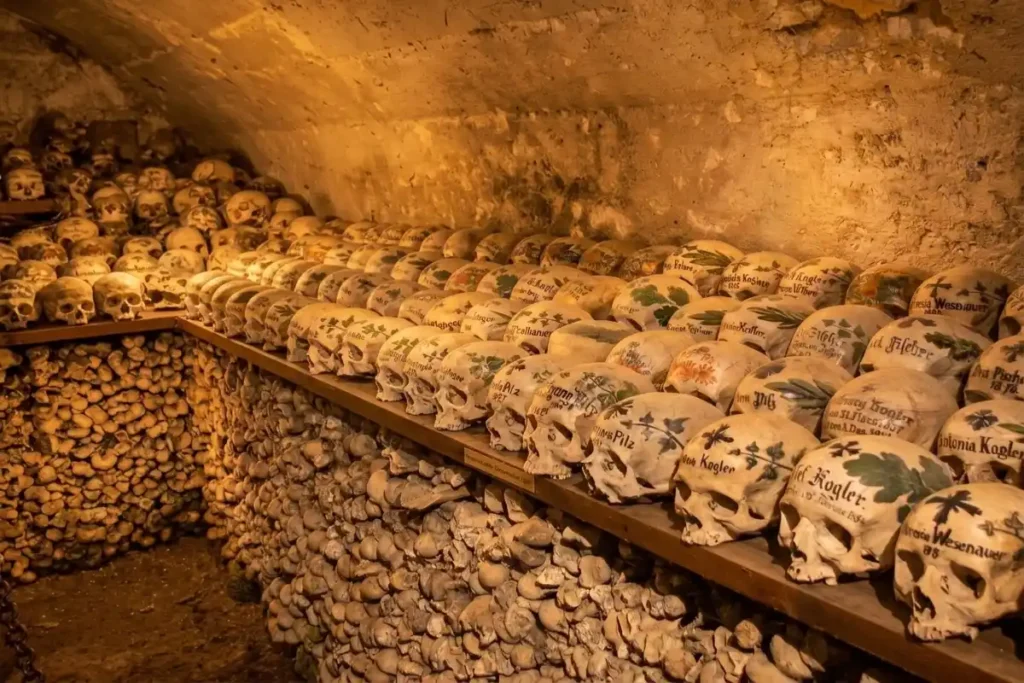
Beside the Catholic Church is a small chapel containing hundreds of carefully painted skulls. Many are decorated with names, dates, flowers, leaves, and religious symbols. It may sound unsettling before you enter, but the chapel feels more like a respectful memorial than a frightening attraction. The visit is short, so it fits naturally with the church and cemetery.
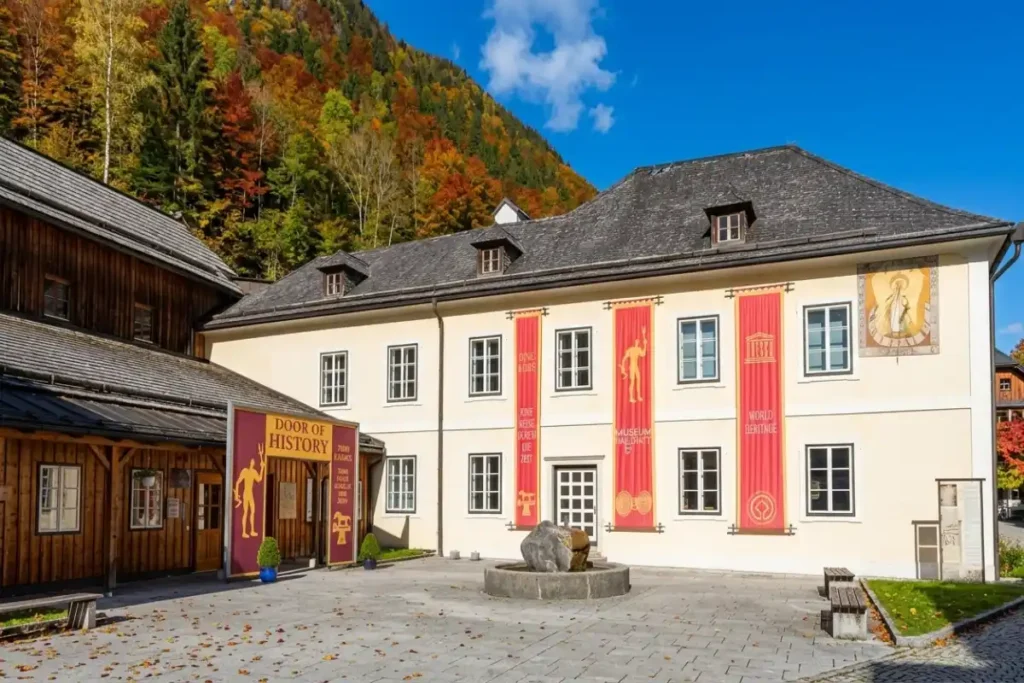
6. The World Heritage Museum
Hallstatt is far more than a beautiful lake village, and this museum explains why. Its exhibits trace thousands of years of local history, from prehistoric salt mining and archaeological discoveries to the development of modern Hallstatt. It is also one of the best places to visit during the busiest part of the afternoon or when the weather turns bad.
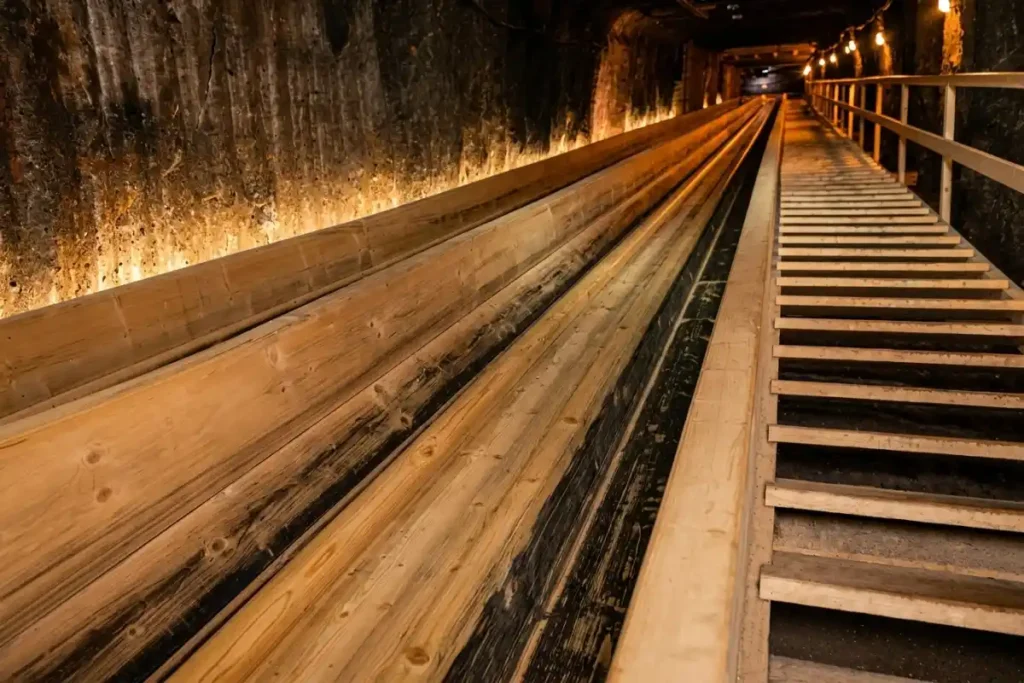
7. The Hallstatt Salt Mine
Hallstatt exists because of salt. Mining shaped the village for thousands of years, long before visitors arrived with cameras. The underground experience combines ancient history with tunnels, miners’ slides, and stories about the people who worked inside the mountain. Give yourself several hours rather than trying to squeeze it between two quick photo stops.
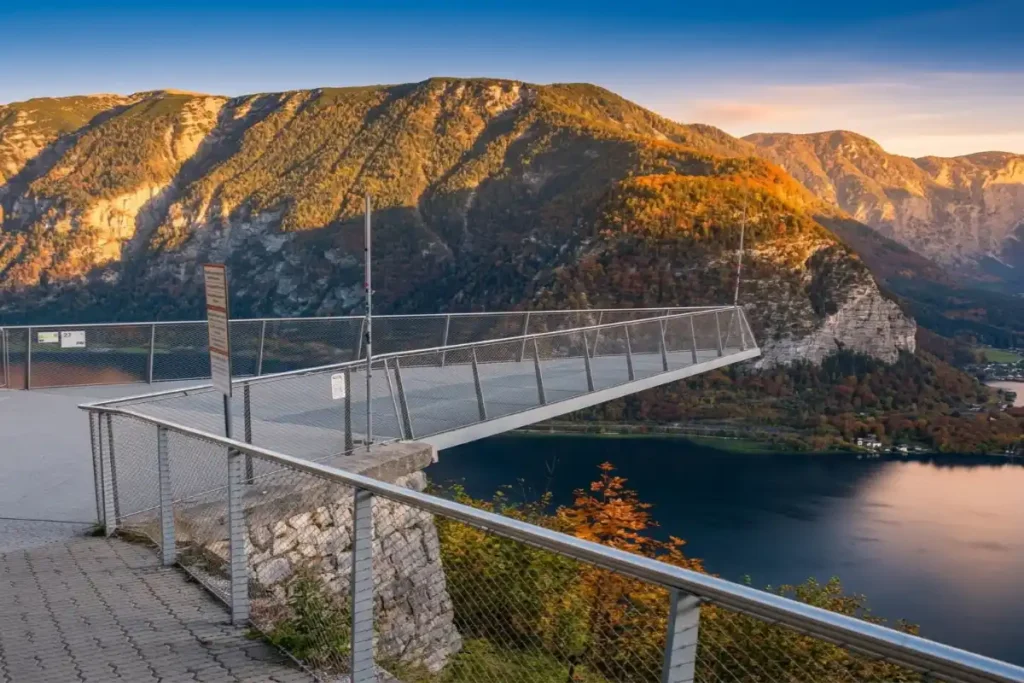
8. The World Heritage Skywalk
High above the village, the Skywalk offers the widest panoramic view of Hallstatt and Lake Hallstatt. From this height, the houses look almost miniature, and the shape of the entire valley becomes much clearer. Try to visit during the clearest part of the day, since low clouds can hide both the lake and the surrounding peaks.
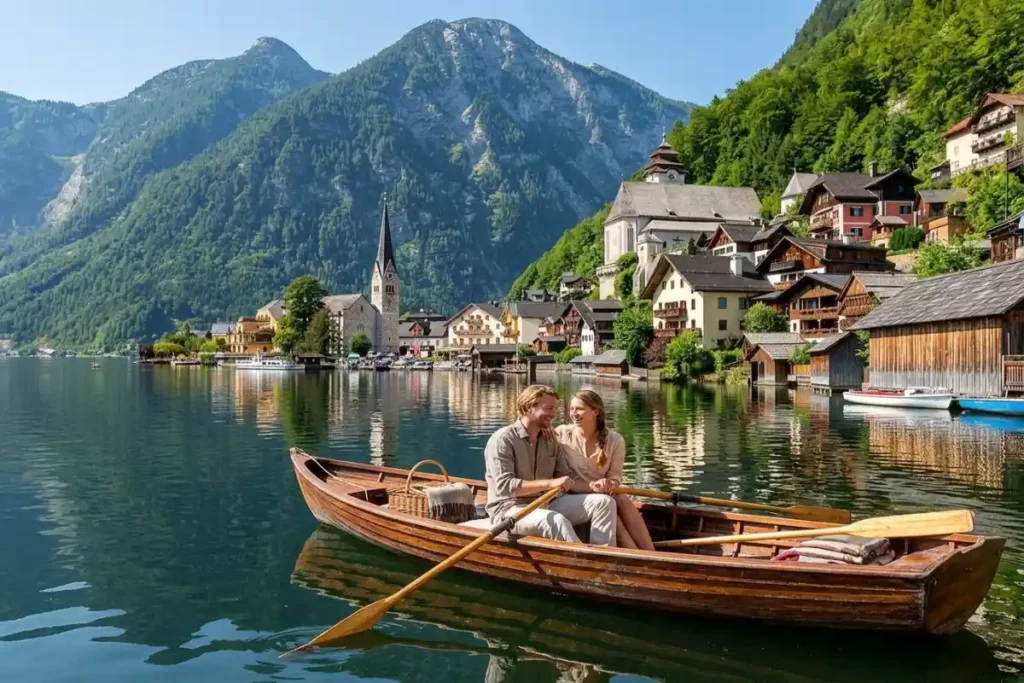
9. Lake Hallstatt
The lake is not simply a background for the village. It is one of the main reasons Hallstatt feels so dramatic. A ferry crossing, sightseeing boat, or small rental boat gives you a completely different view of the houses beneath the mountains. Even a short ride is worth it, especially when the waterfront streets start feeling crowded.
6. What to Eat in Hallstatt

You cannot talk about eating in Hallstatt without talking about the lake. Local menus combine freshly caught alpine fish with the hearty, comforting dishes Austria does best.
The local speciality to look for is Reinanke, a delicate whitefish commonly served grilled or pan-fried with potatoes, vegetables, and lemon. Trout and char also appear regularly on menus, especially during the warmer months.
If fish is not your thing, you will still have plenty to choose from. Hallstatt restaurants commonly serve schnitzel, goulash, roast meats, Kasnocken covered in melted cheese, and classic Austrian desserts such as apple strudel and Kaiserschmarrn.
If you stay overnight, choosing the right part of the village can place several restaurants within an easy walk. Our guide to where to stay in Hallstatt explains the best areas for lake views, convenience, and quieter evenings.
A few quick rules for eating out:
Order the lake fish when it is available: Reinanke is the most distinctive local choice, but trout and char are also worth trying. Ask what is fresh that day rather than choosing only from the printed menu.
Expect to pay more beside the water: Restaurants overlooking the lake or Market Square usually cost more than places in nearby towns. You are partly paying for the setting, and in Hallstatt, that view can still be worth it.
Reserve dinner if you are staying overnight: Hallstatt has a limited number of restaurants, and the best lakeside tables can fill quickly. Some hotel restaurants may also prioritise their own guests.
7. Best Day Trips From Hallstatt
One of the best things about Hallstatt is its location. Sitting in the heart of the Salzkammergut, it is surrounded by alpine lakes, mountain trails, and historic towns that feel completely different from the busy village center.
If you are spending more than one day in the area, dedicate your second day to getting beyond Hallstatt.
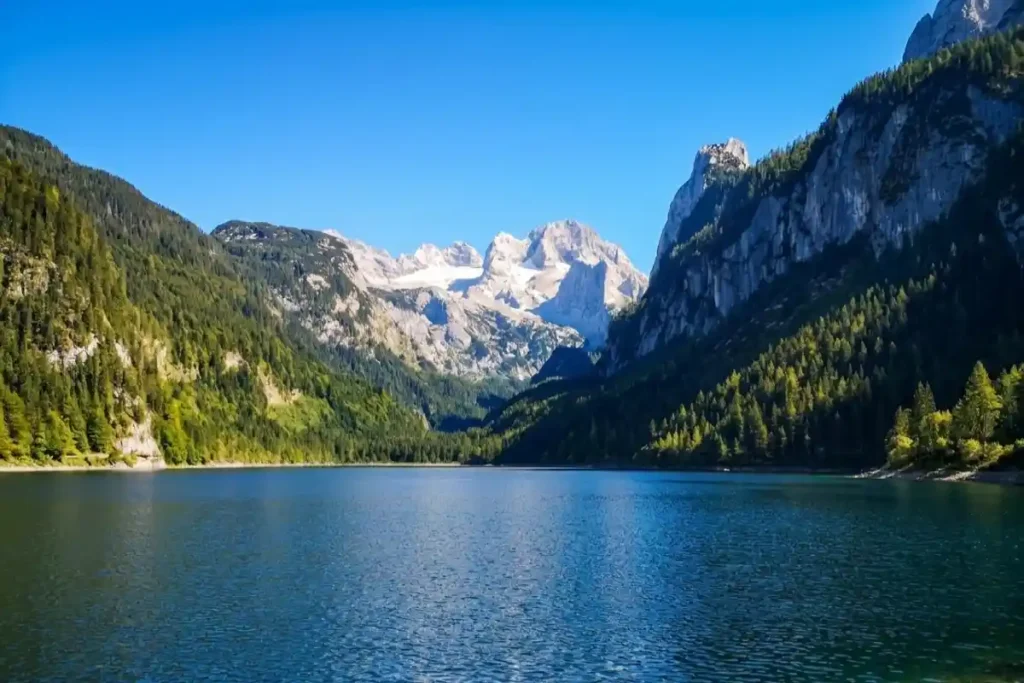
Gosausee: Around half an hour from Hallstatt, Gosausee is an alpine lake sitting beneath the dramatic Dachstein mountains. The easy path around the front lake gives you constant views of forests, clear water, and snow-covered peaks. It is quieter, more spacious, and the perfect choice when you want nature without adding a difficult mountain hike.
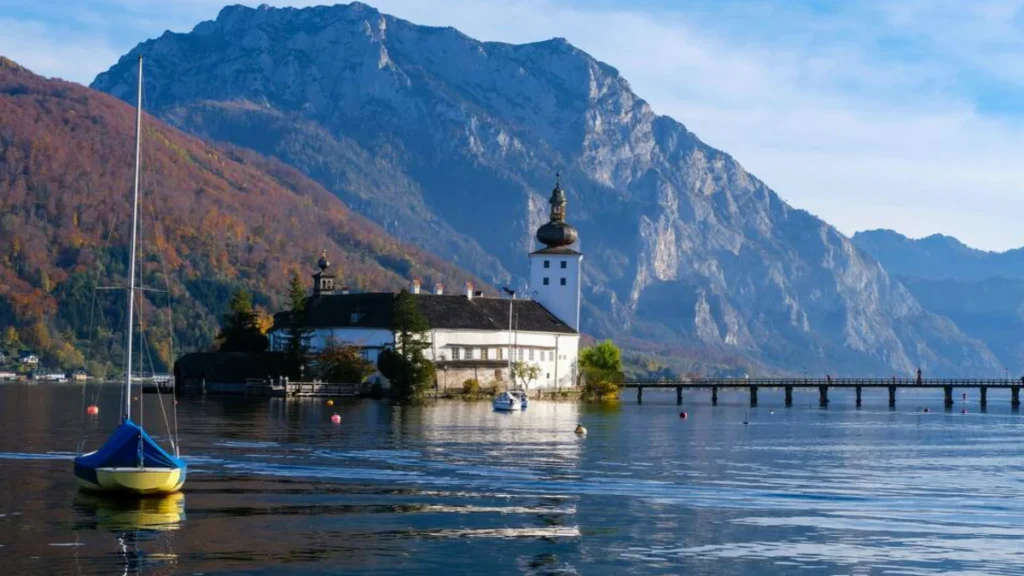
Gmunden: Around 90 minutes from Hallstatt by train, Gmunden sits beside the much larger Lake Traunsee. The town is famous for Schloss Ort, a small island castle connected to the shore by a long wooden bridge, but it also has a lively waterfront, traditional ceramics, cafés, and a proper town center. Our complete Gmunden travel guide covers the best sights and how to plan your day.
If you only have one day in Hallstatt, skip the day trips. You need every hour you have to enjoy the village, lake, churches, museum, and mountain attractions without turning the visit into a race.
Final Thoughts
Hallstatt does not have a grand palace. It does not have a famous museum district. It does not rely on a long list of major landmarks to draw you in. Instead, Hallstatt relies on its setting.
Your goal on this first visit should not be to photograph every house or rush from the viewpoint to the Salt Mine and back again. Your goal should be to arrive by ferry while the lake is still calm, hear the church bells echo across the water, wander past flower-covered homes before the crowds arrive, and sit beside the lake long enough to understand why this tiny Austrian village became famous around the world.
How much time do you need in Hallstatt?
Allow four to six hours for the village. A full day is better if you also want the Salt Mine, Skywalk, museum, or a boat ride.
Is Hallstatt better as a day trip or overnight stay?
A day trip is enough for the main sights, but staying overnight gives you quieter streets, calmer lake views, and a less rushed experience.
What is the best time to visit Hallstatt?
May, June, September, and early October offer pleasant weather with fewer crowds. July and August are warmer but much busier.
Want to keep up with our blog?
Get our most useful Austria & Europe travel tips in your inbox, about once a month.
By subscribing, you agree to receive occasional emails from LinzGo. You can unsubscribe at any time. Read our Privacy Policy.