Is Linz Worth Visiting? (2027) All The Reasons The Answer Is Yes!
Updated: September 22, 2026
This post contains affiliate links; we may earn a commission if you book through these links at no extra cost to you.
Linz is the kind of city that makes a modest first impression and a much stronger one once you start exploring.
Its Danube waterfront, colourful Old Town, hilltop views, bold museums, and creative energy reveal a place that feels far more interesting than its industrial reputation suggests.
So, is Linz worth visiting on its own merits? Yes, and for several reasons that may surprise you.
1. A Surprisingly Beautiful Old Town
Is Linz worth visiting for its Old Town? Yes!
Linz does not reveal its prettiest side all at once. Then you step into Hauptplatz and the city suddenly opens around you. Pastel Baroque façades line the square, the white-marble Trinity Column rises from its centre, and trams glide straight through the middle of it all.
That mix immediately gives Linz a different feeling from a perfectly preserved historic town. The square is beautiful, but it is also part of everyday city life. Locals cross it on their way to work, café tables spread onto the pavement, and visitors pause beneath the column before disappearing into the smaller streets around it.
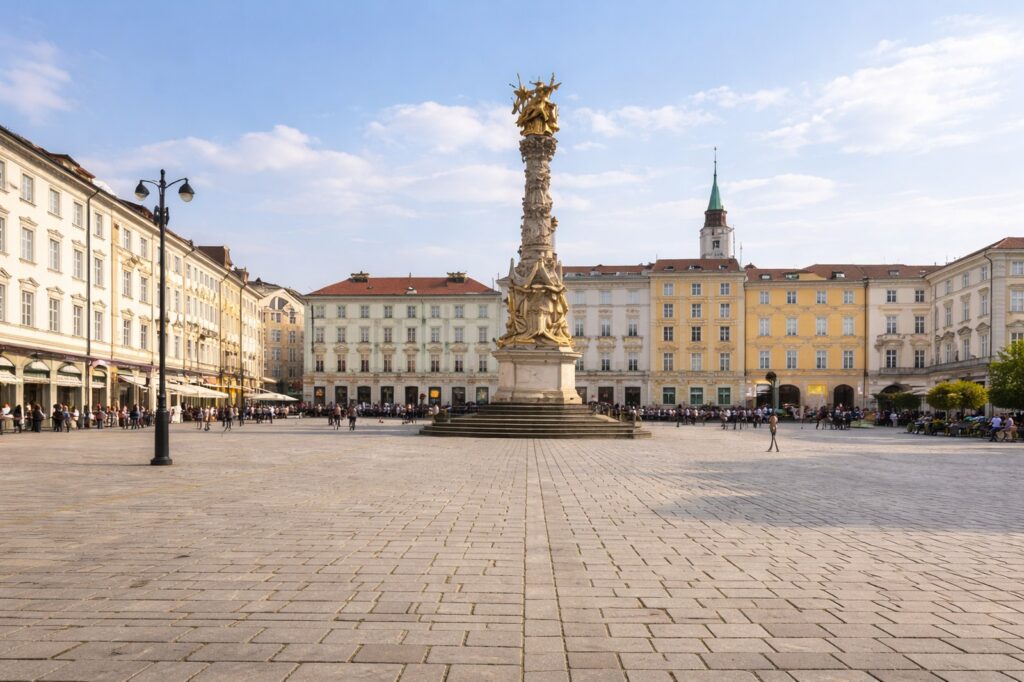
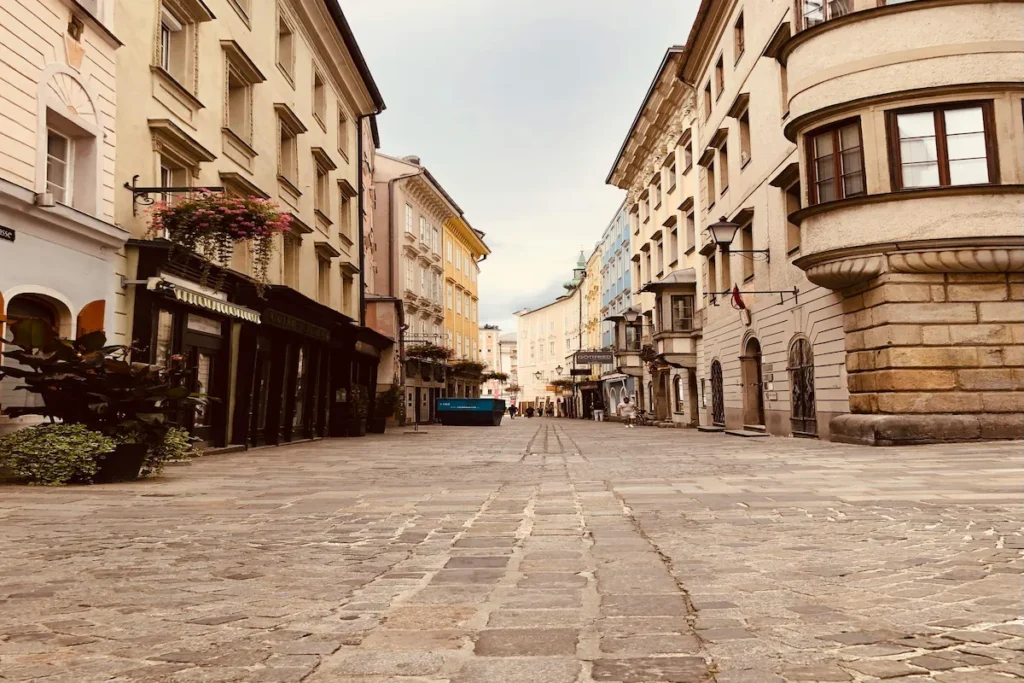
The Old Town begins just beyond the square. Its narrow lanes lead past quiet courtyards, traditional restaurants, small shops, and centuries-old buildings. Some streets feel polished and elegant. Others are slightly uneven and tucked away, which makes exploring them more interesting than simply following a checklist of landmarks.
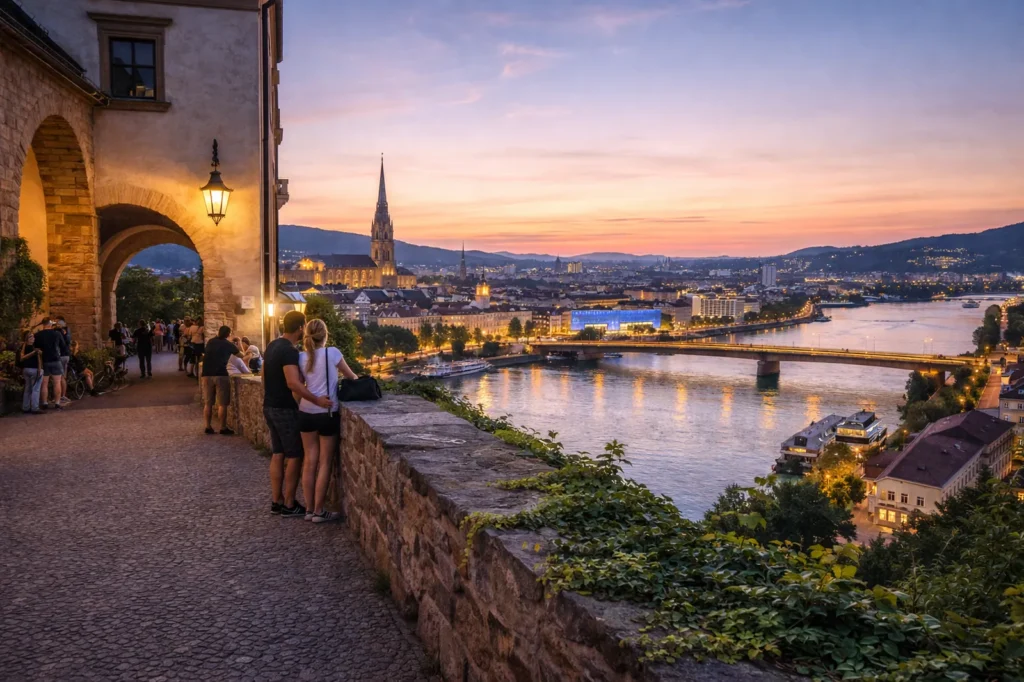
Continue uphill and you will eventually reach Linz Castle. The castle itself now houses the Schlossmuseum, but the area around it is also worth the climb for the views across the rooftops, the Danube, and the more modern parts of the city beyond.
What makes the Old Town work is its compact size. It will not occupy an entire trip, and it does not try to compete with Austria’s largest historic centres. But it gives Linz warmth, character, and a surprisingly attractive starting point for exploring the city.
You will probably pass through Hauptplatz several times during your stay. And each time, it feels a little less like a sightseeing stop and a little more like the natural heart of Linz.
(For more places to explore nearby, take a look at our guide to the best things to do in Linz.)
2. A Much Older City Than It Looks
Is Linz worth visiting for its historic sites? Yes!
Linz may be known today for industry, technology, and modern architecture, but its history stretches back almost 2,000 years. The Romans established a settlement here called Lentia, and the city later became an important trading point beside the Danube.
And while Linz does not have one historic attraction on the scale of Salzburg Fortress or Vienna’s imperial palaces, its past is still visible throughout the centre.
Above the Old Town you will find Linz Castle. Emperor Frederick III lived here during the 15th century, and for a time, Linz became one of the most important cities in his empire.
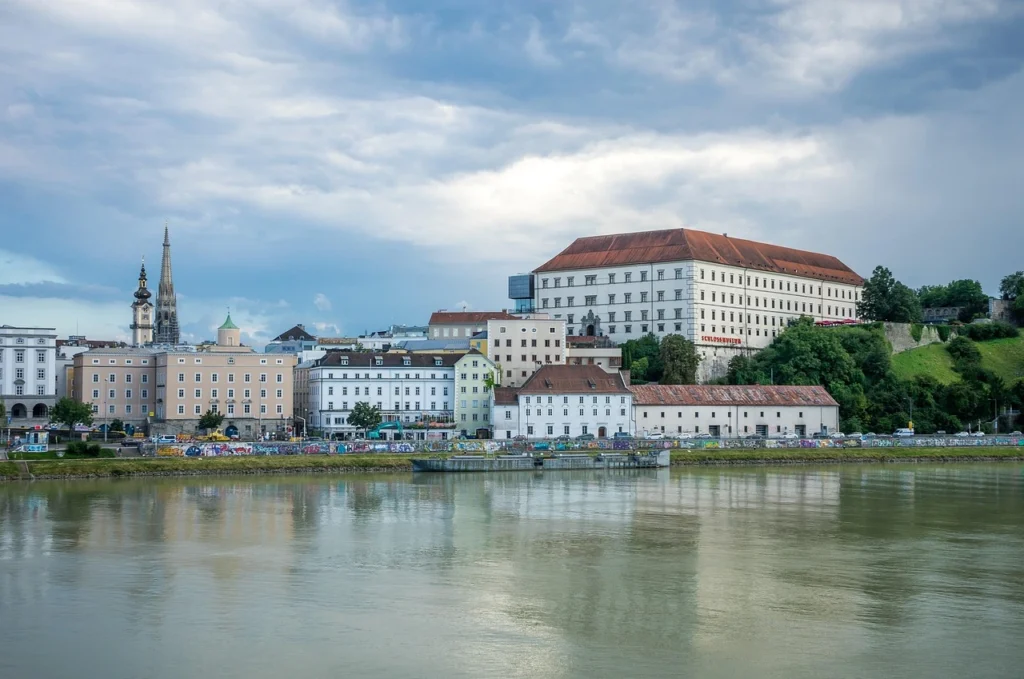
Today, the castle houses the Schlossmuseum, which explores the history and culture of Upper Austria. But even if museums are not your thing, the walk up is still worthwhile.
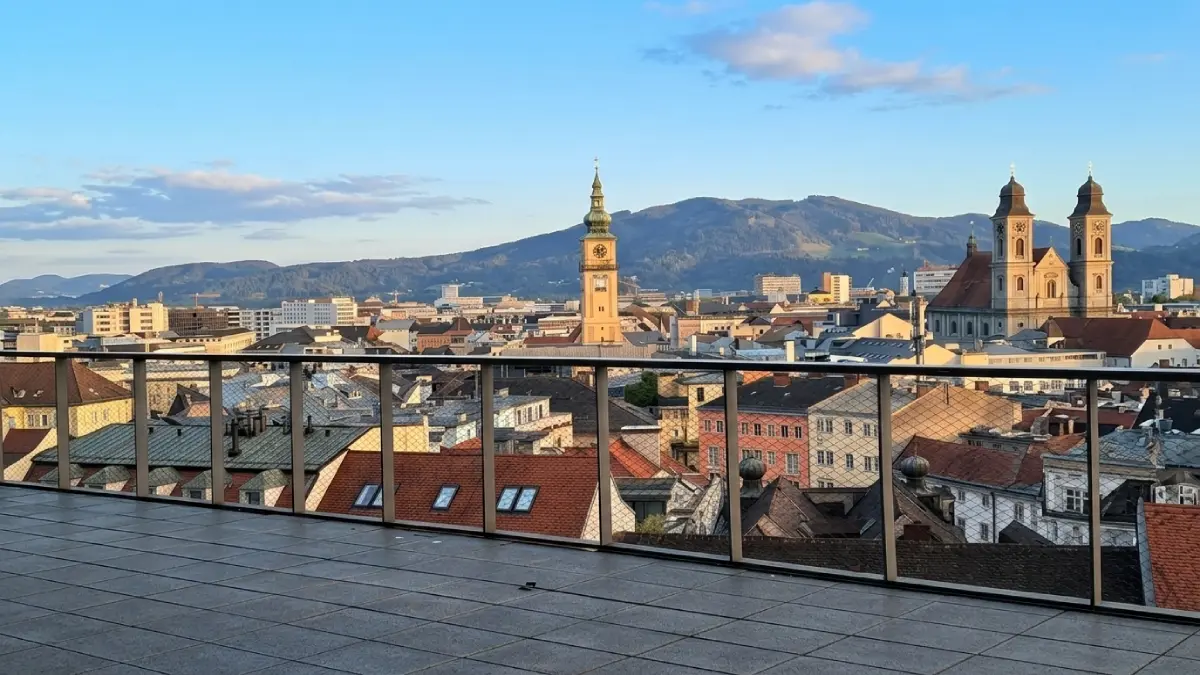
From the castle grounds, you can look across the Old Town rooftops towards the Danube. Historic houses fill the foreground, while bridges, modern museums, and the newer city stretch out behind them.
It is one of those views that explains Linz better than any description could. The old and modern parts of the city are not separated. They sit side by side.
Back below the castle, narrow streets lead towards Hauptplatz, where colourful façades surround one of Austria’s largest enclosed squares.
Standing in its centre is the white-marble Trinity Column. It was completed in 1723 after Linz survived war, fire, and plague. Today, trams pass directly beside it while cafés and shops fill the buildings around the square.
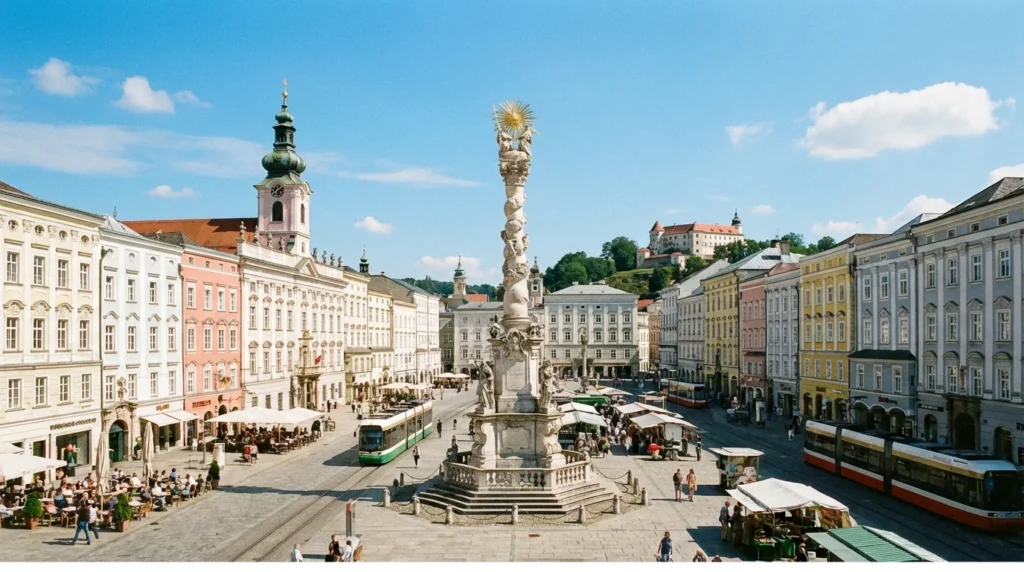
That contrast is part of what makes Linz interesting. Its history is not preserved behind gates or separated from everyday life. You encounter it while crossing the square, walking to the river, or turning into one of the smaller streets around the Old Town.
The historic centre may not be as grand as Austria’s most famous cities. But it is attractive, easy to explore, and far older than Linz’s industrial reputation might lead you to expect.
If you would like to uncover more of the stories hidden around the centre, take a look at our guide to the best guided tours in Linz.
3. Time Along the Danube
Is Linz worth visiting for the Danube? Yes!
The Danube does not simply pass through Linz. It cuts through the heart of the city and brings together some of its best views, museums, green spaces, and places to slow down.
From Hauptplatz, you can reach the river in only a few minutes. Cross the road beside the Nibelungen Bridge and the streets suddenly open onto the wide river, with the glass-fronted Ars Electronica Center on one bank and the Lentos Art Museum on the other.
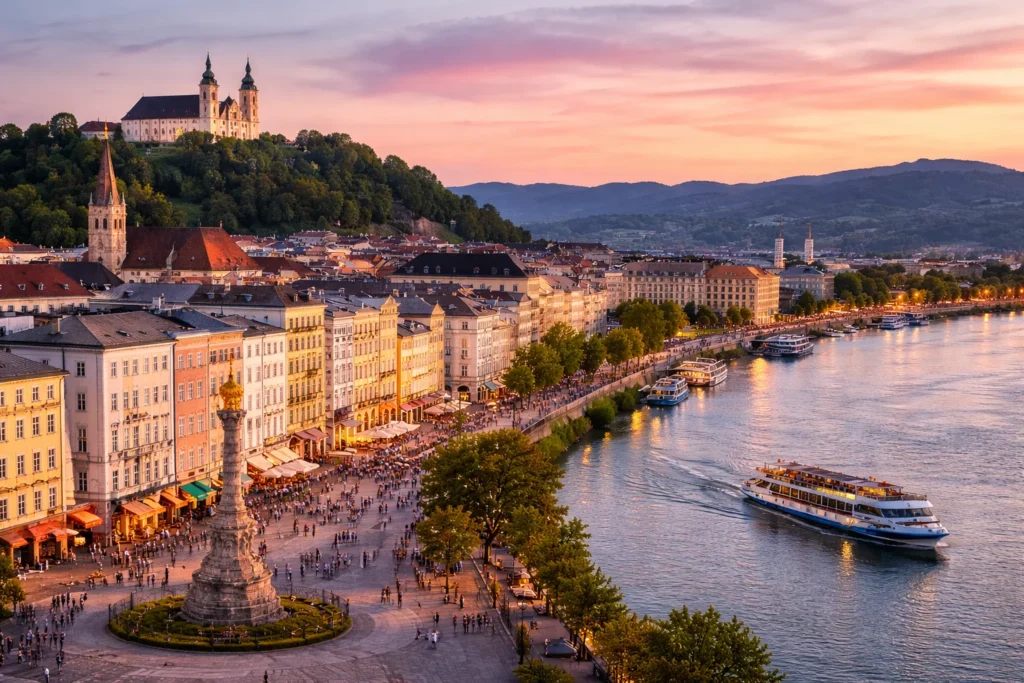
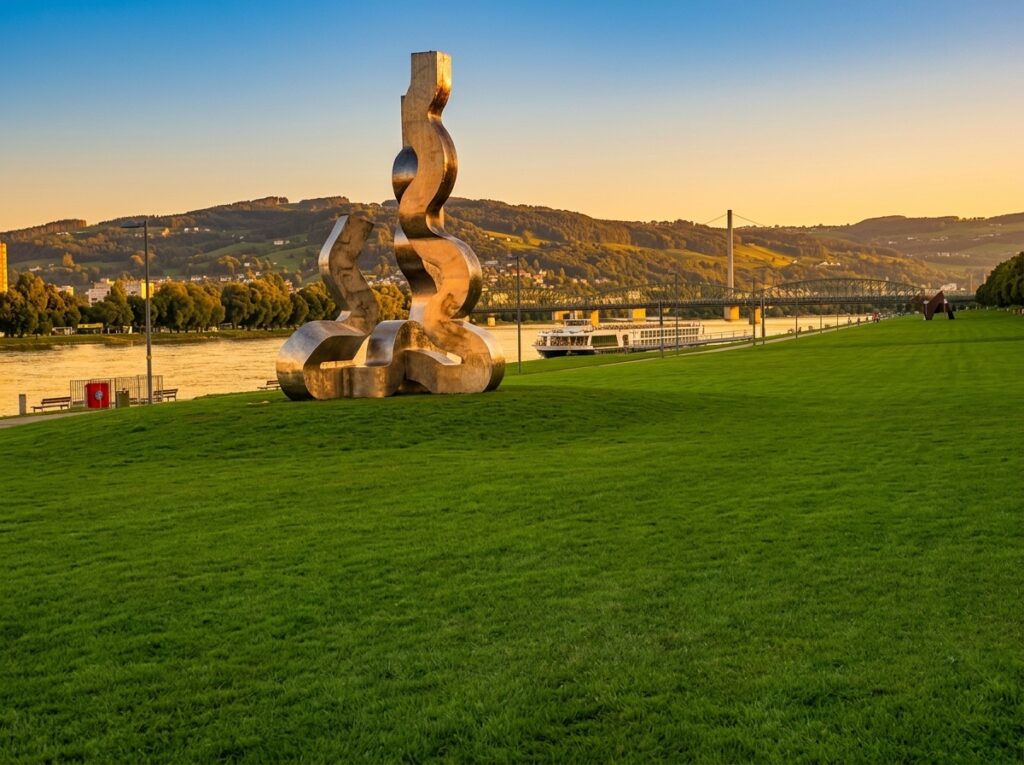
You do not need a plan here. Pick up a coffee, walk beneath the trees, and follow the river for as long as you feel like it. After spending time around museums, churches, and historic streets, the open space beside the Danube feels like a welcome change of pace.
And while summer naturally brings more life to the riverfront, the Danube is not only worth seeing in warm weather. On colder days, the walk between Hauptplatz, Lentos, and the Ars Electronica Center is still one of the easiest ways to experience the contrast that makes Linz interesting.
Historic buildings rise behind you. Modern glass museums face each other across the water. And farther along the river, industrial towers and working harbour areas remind you that Linz is not trying to look like a perfectly preserved Austrian postcard.
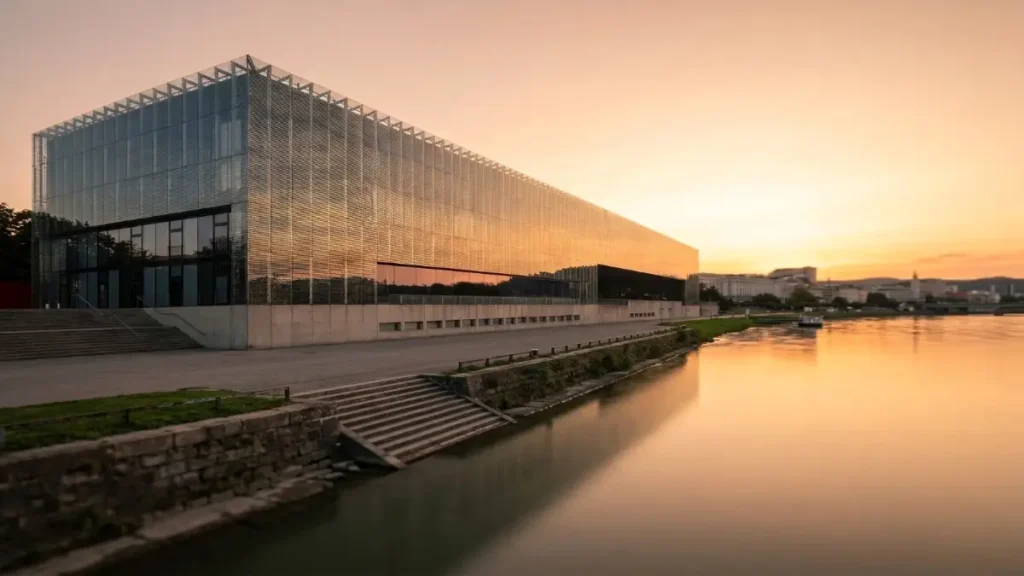
That contrast becomes even more striking after dark.
The façades of Lentos and the Ars Electronica Center light up in changing colours, reflecting across the water and completely changing the atmosphere of the riverfront. If you only see this part of Linz during the daytime, it is worth returning for another walk in the evening.
You can also see the city from the water. Seasonal boat trips travel along the Danube and into Linz’s harbour, passing the museums, industrial buildings, and huge works of street art around Mural Harbor.
The harbour scenery will not appeal to everyone. It is rougher and more industrial than the Old Town. But that is exactly what makes it interesting. You see a side of Linz that most traditional European city breaks do not offer.
For us, the Danube is one of the clearest reasons Linz is worth visiting. It gives the city room to breathe, connects its historic and modern sides, and creates a riverfront that feels lived in rather than built only for tourists.
And those colourful buildings beside the water are not just impressive from the outside. They lead directly into another of the biggest reasons to visit Linz…
4. Austria’s City of Media Arts
Is Linz worth visiting for its museums? Yes! Especially since Linz is a UNESCO City of Media Arts.
Linz’s creative side is difficult to miss.
Modern art appears beside the Danube. Enormous murals cover industrial buildings around the harbour. And after sunset, the glass façade of the Ars Electronica Center glows in changing colours across the water.
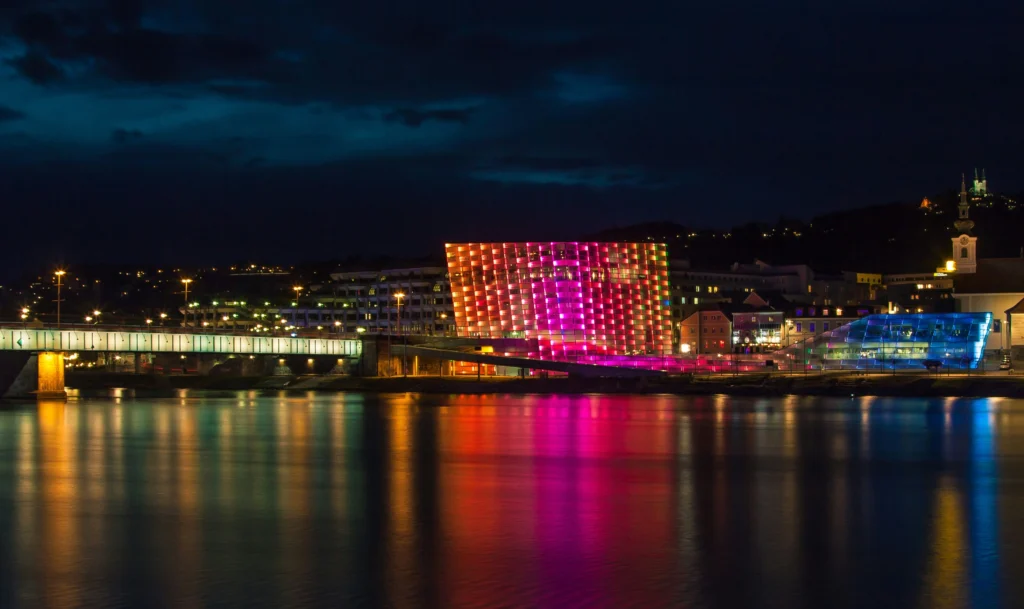
At the centre of it all is the Ars Electronica Center, often called the Museum of the Future.
This is not the kind of museum where you simply walk past objects inside glass cases. Its exhibitions explore artificial intelligence, robotics, biotechnology, space, and the ways technology may change our lives.
You can interact with many of the displays, which makes the museum especially enjoyable for families and visitors who do not usually spend much time in museums.
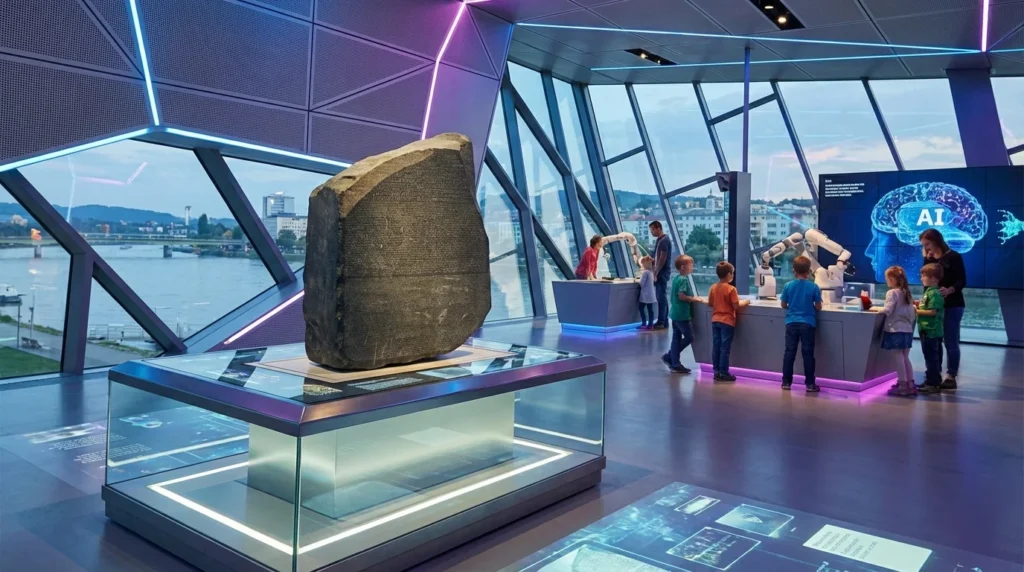
The biggest highlight is Deep Space 8K. Images are projected across a huge wall and the floor, creating the feeling that you are standing inside the presentation rather than watching it from a distance.
Depending on the programme, you might travel through space, explore the human body, visit a historic site, or take part in an interactive experience.
I would recommend checking the day’s programme before you visit. It would be a shame to rush through Ars Electronica and miss the part that makes it most memorable.
But there is more to Linz’s museum scene than technology.
Directly across the Danube stands the Lentos Art Museum, another of the city’s most recognisable buildings.
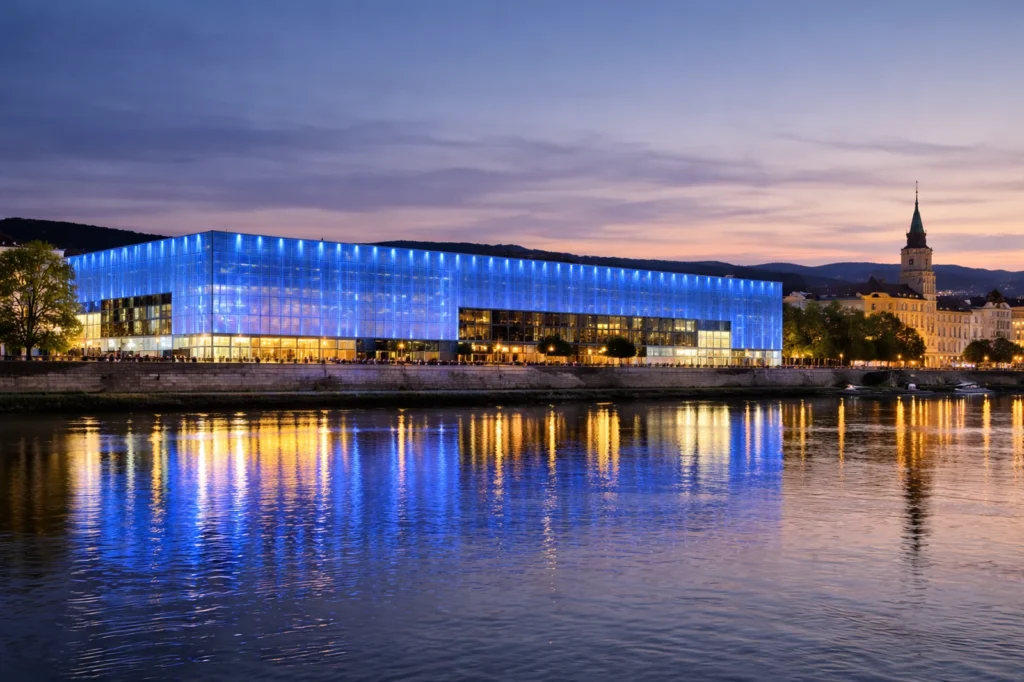
Inside, you will find modern and contemporary paintings, sculptures, photography, and graphic art. The museum is much smaller than Vienna’s major galleries, but that also means you can enjoy it without dedicating an entire day to the visit.
Then there is one of Linz’s most unusual art attractions: Mural Harbor.
Around the working harbour, enormous murals cover warehouses, concrete walls, and industrial buildings. Some pieces stretch across the entire side of a building.

At first, street art and a working industrial harbour may sound like an unusual combination. But that is exactly why the area stands out.
The artwork does not try to hide Linz’s industrial character. It turns it into part of the experience.
Because the harbour is still a private working area, you normally need to join an organised walking or boat tour to see the murals properly.
Ars Electronica, Lentos, and Mural Harbor are all very different. But together, they show why Linz feels unlike most other Austrian cities.
And after spending time with futuristic technology and contemporary art, the city’s historic churches offer a complete change of atmosphere.
5. Going To Church
Is Linz worth visiting for its cathedral and other churches? Yes!
After the futuristic exhibitions and glowing façades beside the Danube, Linz’s churches offer a complete change of atmosphere.
The most impressive is the Mariendom, also known as the New Cathedral. Its enormous tower rises above the surrounding streets, although the true scale of the building becomes clear only after you step inside.
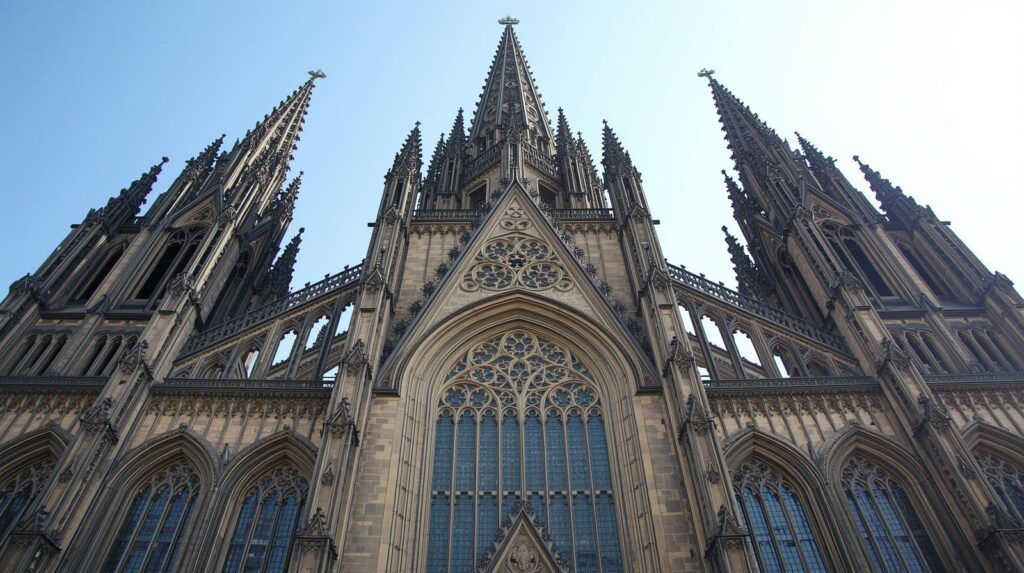
The long central aisle, towering stone columns, high vaulted ceilings, and colourful stained-glass windows make the interior feel much grander than the relatively quiet streets outside.
Mariendom was completed in 1924 and is considered the largest church in Austria by capacity, with room for around 20,000 people. But numbers do not really capture the experience of standing inside it. Even when other visitors are around, the huge interior can still feel calm and surprisingly peaceful.

Even if churches are not normally high on your sightseeing list, Mariendom is worth entering briefly. The stained-glass windows are especially interesting because several depict scenes connected with Linz and Upper Austria rather than only traditional religious stories.
Closer to Hauptplatz, you will find the Old Cathedral. It is much smaller and less dramatic from the outside, but its richly decorated Baroque interior creates a warmer and more intimate atmosphere.
The contrast between the two is part of the appeal. Mariendom impresses through its scale, while the Old Cathedral feels more closely connected to the historic streets around it.
But the most memorable church setting in Linz waits above the city.
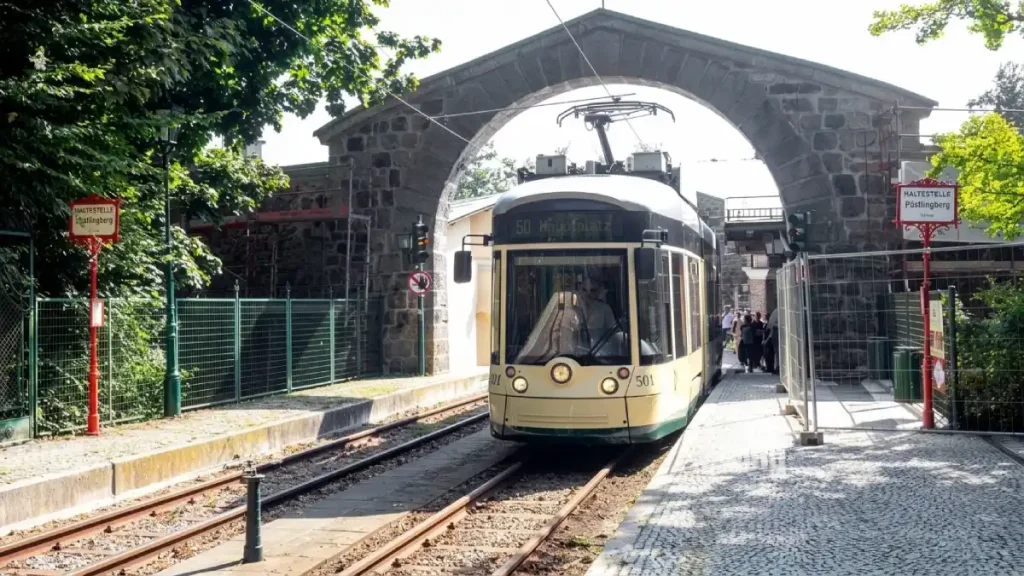
Ride the Pöstlingbergbahn from Hauptplatz and it will carry you up to the twin-towered Pöstlingberg Basilica. The church is attractive in its own right, but the journey and hilltop location turn the visit into a fuller experience.
6. So What About the Food?
And speaking of food…is Linz worth visiting for its food in general? Yes!
The obvious place to start is Linzer Torte. Recipes for the cake date back to 1653, making it one of the oldest known cakes named after a city.
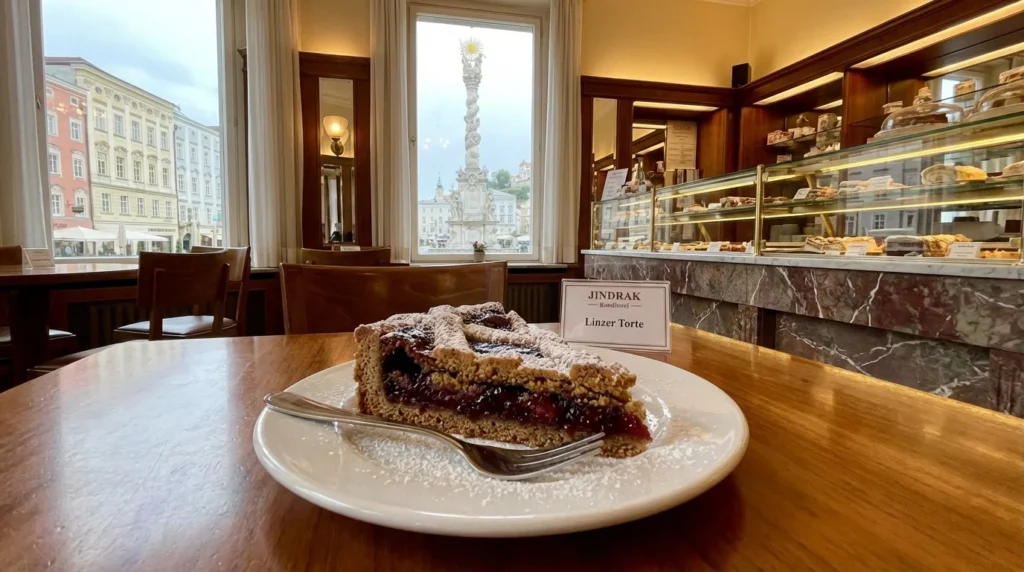
The traditional version combines a crumbly nut pastry with redcurrant jam and the familiar lattice pattern on top. It is firmer and slightly more tart than many Austrian cakes, which makes it especially good with coffee.
You will find Linzer Torte in cafés and bakeries across the city, and recipes vary slightly from place to place. Trying a slice during your visit is an easy way to experience one of Linz’s best-known local specialties.
Local food goes beyond cake, too. Traditional Upper Austrian dishes often include dumplings, soups, potato dishes, and hearty meals made with simple regional ingredients.
If you want something more casual, local markets are also a good place to look for fresh produce, baked goods, regional products, and quick lunch options away from the main tourist streets.
Linz may not be a city you visit purely for the food, but its cafés, traditional dishes, markets, and signature cake add a nice local layer to the trip.
7. Festivals and Events in Linz
Is Linz worth visiting during one of its major festivals? Yes!
Linz feels noticeably different when one of its big events takes over the city.
The best-known is the Ars Electronica Festival, held each September. For several days, exhibitions, performances, workshops, and unusual installations appear across Linz, turning museums, public spaces, and unexpected buildings into part of the programme.
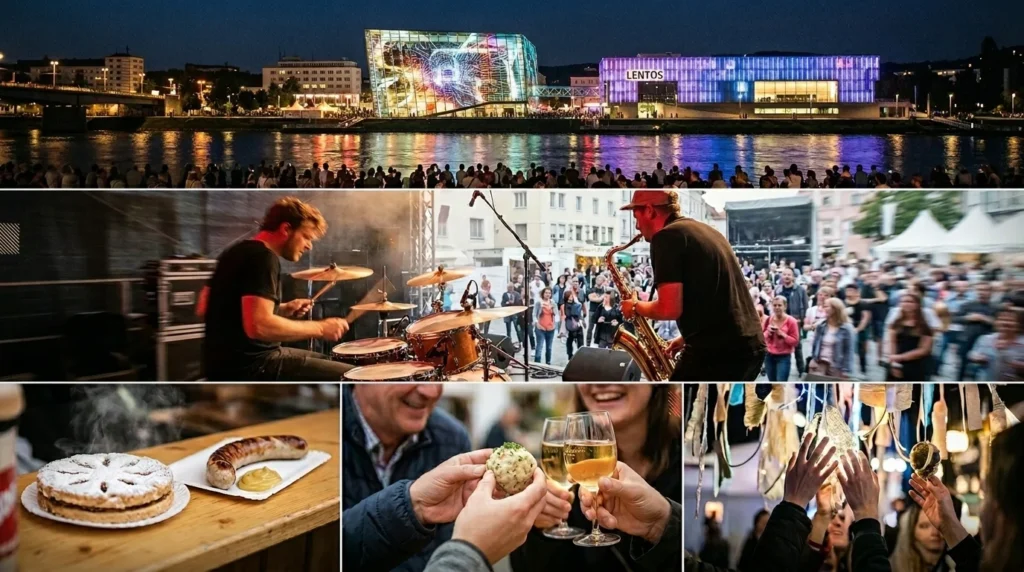
You do not need to be an expert in technology or media art to enjoy it. Some projects are playful and interactive, while others explore bigger questions about artificial intelligence, climate, and the future.
The Pflasterspektakel creates a completely different atmosphere. Street performers fill the Old Town with music, comedy, acrobatics, dance, and magic, often drawing large crowds around Hauptplatz and the surrounding streets.
Linz also hosts the Linzer Klangwolke beside the Danube, along with Christmas markets, outdoor concerts, and seasonal celebrations throughout the year.
Accommodation can become more expensive during the largest events, so booking early is sensible if your dates are fixed.
You can see what is happening during your trip in our complete Linz events calendar.
And beyond the festivals, Linz also makes a useful base for exploring the surrounding region.
8. Exploring the Region
Is Linz worth visiting as a hub for exploring Upper Austria? Yes!
Because Linz is one of the main transport hubs in Upper Austria, you will find plenty of easy day-trip opportunities beyond the city.
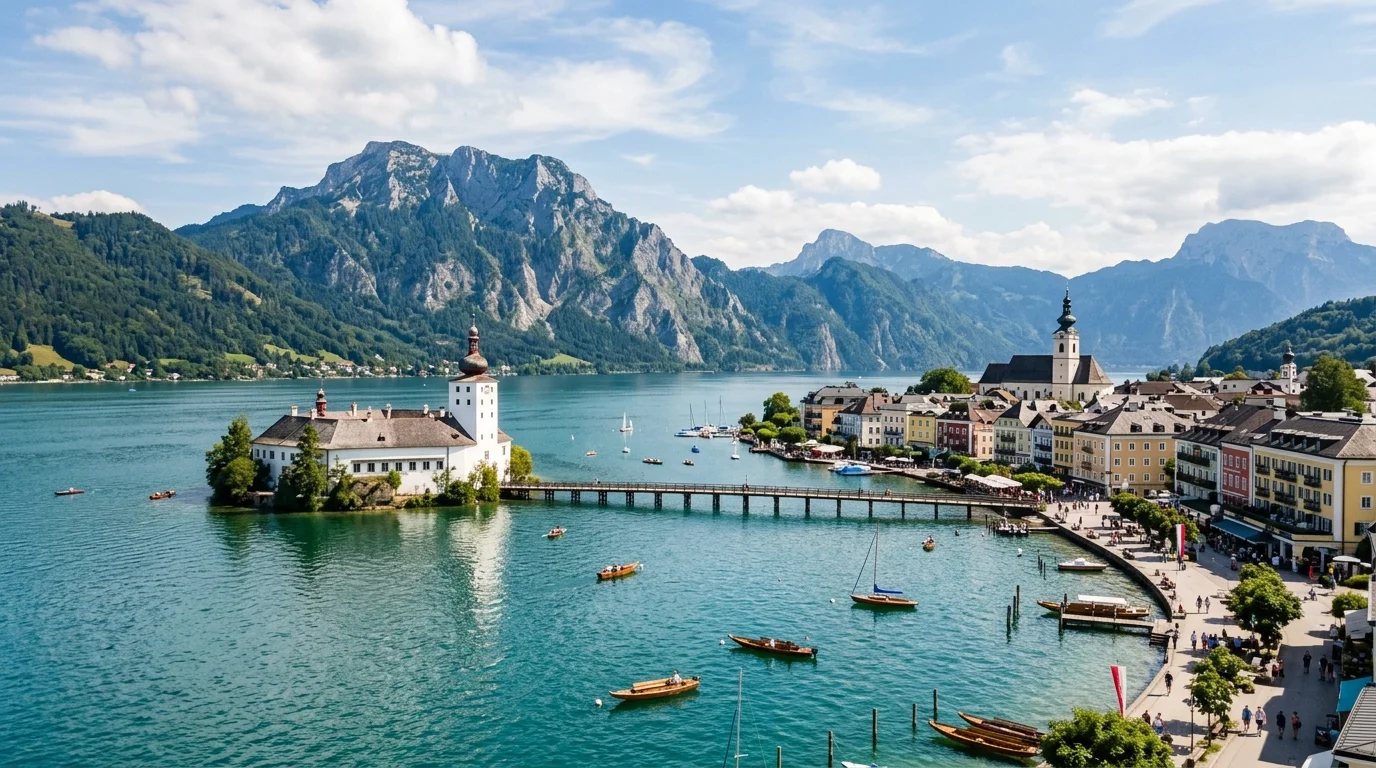
Take the train south to Gmunden, a colourful town sitting beside Lake Traunsee. The waterfront is the main attraction, with mountain views across the lake and the photogenic Seeschloss Ort reached by a long wooden walkway.
You can read more about planning the trip in our Gmunden Austria travel guide.
Another worthwhile option is Steyr, where two rivers meet beneath a remarkably attractive Old Town. Its main square is lined with colourful historic buildings, while smaller streets lead towards churches, viewpoints, and the riverside.
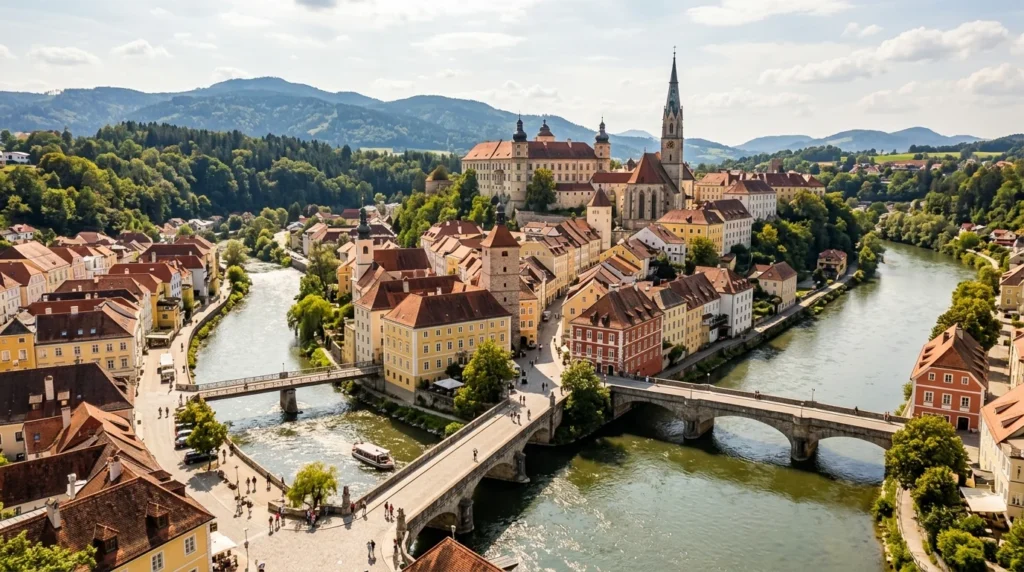
Our Steyr Austria travel guide covers what to see while you are there.
And then there is Hallstatt, one of Austria’s most famous lakeside villages. It can be reached from Linz, although the journey requires more effort and the village is often extremely busy. Still, if Hallstatt is high on your Austria wish list, Linz can be a practical starting point for the day.
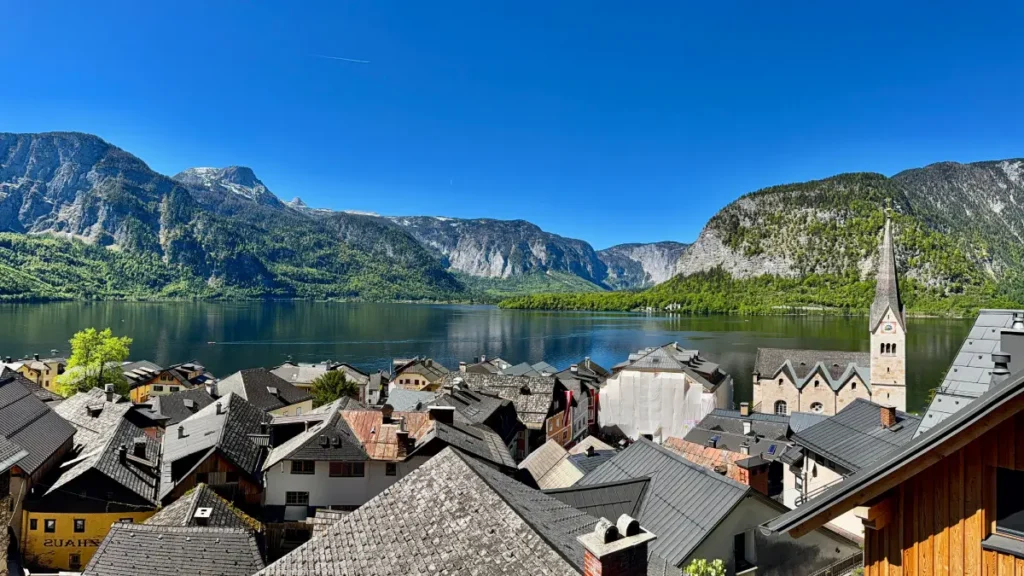
You can find the transport options and main stops in our Hallstatt day-trip guide.
Plus, direct trains make it easy to continue from Linz to Salzburg or Vienna. Both are possible to visit for the day, but I personally think they deserve more than a few rushed hours. They usually make better next stops on a longer journey through Austria.
For more nearby towns, lakes, and countryside escapes, take a look at our complete guide to the best day trips from Linz.
9. Getting Around Linz
Getting around Linz is easy, especially if you stay close to the center.
Many of the main sights, including Hauptplatz, the Old Town, Mariendom, the Danube, Lentos, and Ars Electronica, are within comfortable walking distance of each other.
For longer trips, the tram network is usually the simplest option. Trams connect Linz Hauptbahnhof with Hauptplatz and continue through the city, so most visitors can get around without needing a car.
The most scenic ride is the Pöstlingbergbahn, which leaves from Hauptplatz and climbs to Pöstlingberg for views over Linz and access to the basilica and Grottenbahn.
Buses cover areas beyond the tram network, but short-stay visitors will probably use them only occasionally.
If you’re staying overnight, Courtyard by Marriott Linz is a convenient option with easy access to the center and public transport.
A car is usually unnecessary for sightseeing in Linz itself, but it becomes more useful if you plan to explore lakes, villages, or countryside outside the main public transport routes.
Linz is also well connected with Vienna and Salzburg. You can compare the options in our guide to travelling from Vienna to Linz.
Final Thoughts
So, is Linz worth visiting? 100% yes!
The colourful Old Town, the Danube, the hilltop views, the museums, the food, the festivals, and the easy day-trip opportunities all make Linz much more interesting than its industrial reputation suggests.
It may not be the first city people think of when planning a trip to Austria. But that is also part of its appeal. Linz feels creative, relaxed, easy to explore, and refreshingly different from the country’s more famous destinations.
Go and discover it for yourself!
If you are planning your first visit, take a look at our guide to spending one day in Linz.
And for more help planning your trip, you may also enjoy:
Want to keep up with our blog?
Get our most useful Austria & Europe travel tips in your inbox, about once a month.
By subscribing, you agree to receive occasional emails from LinzGo. You can unsubscribe at any time. Read our Privacy Policy.